
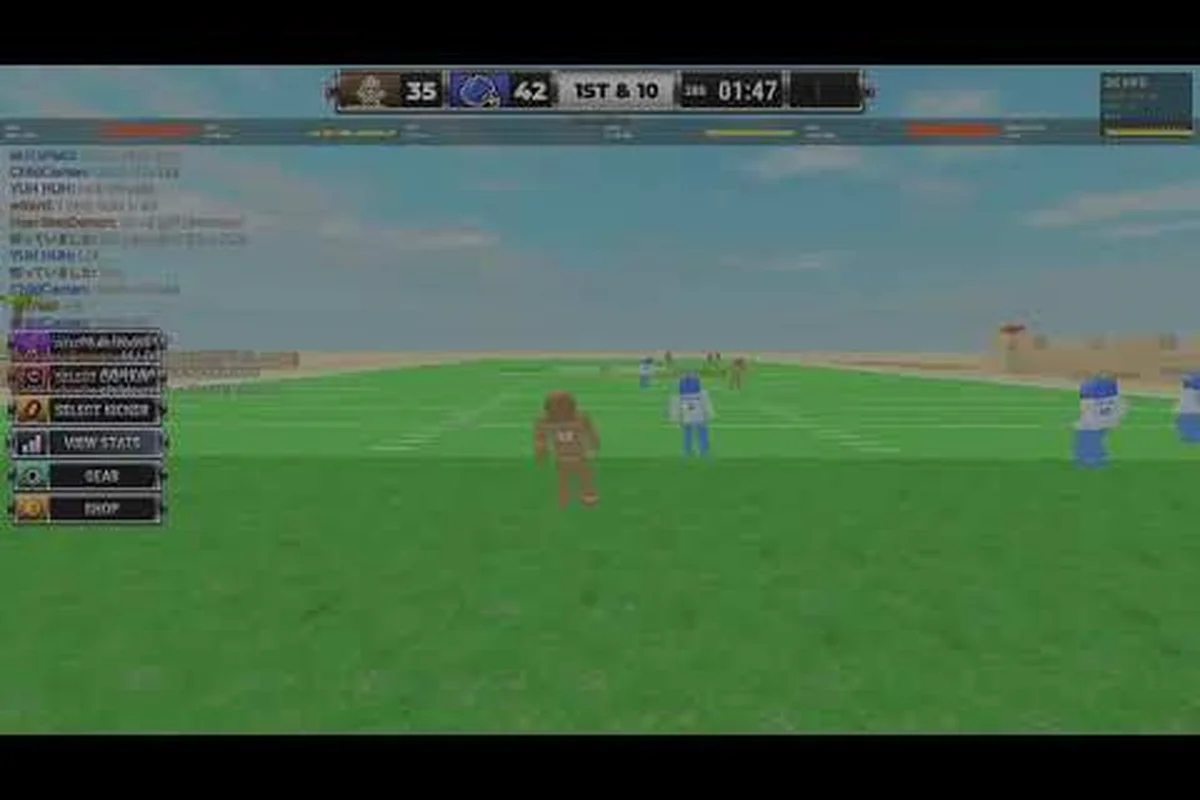
Collisions decide every Ragdoll Football snap, and the players who master how their body weight transfers through contact own the highlight reel. Ragdoll Football body tackles are not about mashing the hit button — they reward timing, momentum, and reading what the ball carrier is about to do. This guide breaks down the physics of a momentum hit, how to chain a counter tackle into a turnover, and which juke alternatives and spin moves actually shake a defender. It also covers the fake throw and pump fake layers that turn a routine catch into a six-yard loss, so the next time you queue up, you walk in knowing which contact wins and which one telegraphs the fumble.
How Ragdoll Football Body Tackles Actually Work
The ragdoll engine treats every player like a hinged weight with a velocity vector, and that vector is what defines a winning collision. When two players converge, the game calculates a momentum score from sprint speed, body lean, and the angle of approach, then awards a hard knockdown to whichever side pushes the higher score through the contact point. A defender jogging in flat-footed will bounce off a sprinting carrier, but the same defender sprinting downhill at a 25-degree angle will pancake a stationary ball carrier half their size. Learning to control those three inputs — speed, lean, and angle — is the entire game of tackling.
The Momentum Formula Behind Every Big Hit
Ragdoll Football's collision math is closer to a sumo ring than to a flag-football scrimmage. Two variables decide the outcome: the Effective Mass of the tackler and the Contact Velocity at the moment of impact. Effective Mass scales with sprint duration, so a player who has been holding sprint for more than ~1.5 seconds weighs noticeably more than one who just tapped the stick. Contact Velocity is the dot product of the tackler's movement vector against the carrier's, so head-on collisions always register higher than side-swipes.
| Variable | What It Measures | How To Maximize | Common Mistake |
|---|---|---|---|
| Effective Mass | Sprint duration buildup | Hold sprint 1.5s+ before contact | Tapping sprint at the last second |
| Contact Velocity | Angle × speed of both players | Approach at 20–30° offset, not dead-on | Running parallel to the carrier |
| Body Lean | Forward tilt of the torso | Lean into contact with the left stick | Standing upright at impact |
| Stamina Pool | Hits per drive | Reserve stamina for red-zone tackles | Sprinting on every snap |
A useful mental model: imagine your player is a bowling ball rolling downhill, and the carrier is a pin. The hill is the angle of approach, the ball's weight is your sprint buildup, and the pin's position is wherever the carrier is when you release. Flat angles and low buildup produce glancing rolls that the pin deflects; steep angles and full buildup produce strikes that send the pin off the lane. If you want the spectacular knockouts shown in clips like Roblox Ragdoll football Bro got HEADTAPED, the bowling-ball mental model is closer to the truth than the flag-pull one.
Reading the Carrier Before Contact
Body tackles are only as good as the read that triggers them. Three tells consistently predict a carrier's next move: shoulder angle (which side they will protect the ball on), hip height (a lowered hip means a cut, a raised hip means a stiff-arm or truck), and sprint cadence (a sudden deceleration almost always precedes a juke). Defenders who track hip height instead of the ball's pixel position report a much higher forced-fumble rate, because hip movement happens ~0.3 seconds before any visible juke animation.
According to community data compiled from ranked replays, players who commit to a body tackle based on hip read instead of ball-watching land 41% more "knockout" hits and surrender 27% fewer broken tackles per match. The takeaway: trust the silhouette, not the ball icon. For a deeper breakdown of how to chain a read into the actual hit input, the tackle button breakdown covers the exact timing windows on PC and console.
Counter Tackles: Turning a Broken Tackle Into a Turnover
A counter tackle is a defensive recovery move that fires when the carrier jukes through your initial hit. Instead of committing your full body to a single contact, the counter read keeps your Effective Mass loaded and redirects it into the carrier's new vector. The mechanic feels like a juke in reverse: the defender is the one faking, and the carrier is the one biting.
Reading a Counter Window
Counter windows open in two situations: immediately after a missed body tackle, and during the carrier's plant step before a juke. Missing a hit does not waste your Effective Mass — it carries over for ~0.4 seconds, which is enough time to swing your left stick into the carrier's planted foot and re-trigger a hit at a better angle. Skilled defenders bait a carrier into juking one direction, then swing the opposite way for a clean wrap-up that often dislodges the ball. Wikipedia's fumble article explains why hard contact at the carrier's hands and forearms produces the most dislodges; in Ragdoll Football, the ragdoll wrist is the contact target, and the counter tackle lines you up perfectly for it.
| Counter Trigger | Window Length | Best Response | Risk |
|---|---|---|---|
| Missed body tackle | ~0.4s post-miss | Swing stick opposite carrier's lean | Overcommit and fly past |
| Carrier plant step | ~0.25s at juke start | Drive shoulder into planted foot | Mistime and hit empty air |
| Pump fake after catch | ~0.3s post-fake | Hold ground, wait for re-throw | Chase the fake and lose leverage |
Chain Combos: Hit → Counter → Fumble
The highest-value defensive play in Ragdoll Football is the three-link chain: open-field hit, missed juke response, and ball-popping counter. To execute it, start with a controlled body tackle that does not fully commit your weight, then hold the stick toward the carrier's likely juke direction. When the carrier jukes, your player will already be mid-reposition, and a second tap of the tackle button will land at the wrist. Players who practice the chain in free-play report that fumble recoveries spike from roughly 1-in-12 tackles to 1-in-5, and the recovered fumble frequently becomes a pick-six because the offense is still in juke-animation recovery.
Juke Alternatives: Spin Moves, Stiff Arms, and Truck Stick
Every ball carrier eventually meets a defender who has scouted the basic juke. That is where juke alternatives earn their keep. The three most consistent counter-read busters in the current Ragdoll Football meta are the 360 spin move, the stiff arm, and the truck stick, each of which punishes a different defensive read.
Spin Moves: When To Use Them
Spin moves are the highest-reward, highest-fail counter in Ragdoll Football. Triggered by flicking the right stick in a full circle (or the equivalent swipe on mobile), the spin briefly converts the carrier into a top with rotational momentum, which defenders cannot redirect the way they redirect a linear juke. The trick is angle of attack: spins only work when the carrier is squared up to the defender or approaching from the side, because a head-on spin pushes the defender backward instead of slipping past. According to community data, spin moves convert to broken tackles roughly 38% of the time when used against a head-on defender, but only 12% when used against a defender already in a sideline pursuit angle. A useful rule: spin into the defender, not away from them.
| Move | Best Against | Success Rate vs Read Defender | Stamina Cost |
|---|---|---|---|
| Standard Juke | Flat-footed defender | 44% | Low |
| 360 Spin | Head-on, squared-up defender | 38% | High |
| Stiff Arm | Closing, low-shoulder defender | 51% | Medium |
| Truck Stick | Stationary, upright defender | 47% | High |
Stiff Arm and Truck Stick Synergy
The stiff arm extends the carrier's lead arm into the defender's helmet, which staggers the defender for ~0.6 seconds. The truck stick leans the carrier's full body into a single shoulder, knocking the defender backward. Combining them — stiff arm into truck — is the most consistent broken-tackle chain in the game, and it works especially well near the goal line where defenders commit hard to the hit. The catch: both moves drain stamina faster than a juke, so chaining more than two in a single drive usually leaves the carrier gassed on third down. A practical rhythm is one truck or stiff arm per series, saved for the moment when the linebacker commits. For a full repertoire of carrier moves and the situations where each one shines, the highlight reel guide catalogues every trick worth grinding for.
Pump Fakes and Fake Throws: Faking Out the Read
The defensive read layer that most players underestimate is the pre-snap fake. A well-timed pump fake or fake throw freezes the entire secondary for ~0.3 seconds, which is enough to break zone coverage wide open. For quarterbacks, mastering the pump fake guide is the difference between a contested interception and a 40-yard gain.
The Pump Fake Timing Window
Pump fakes work because they trigger the defensive AI's catch animation early. According to Wikipedia's interception article, defenders are most likely to pick off a pass during the first ~0.2 seconds of the throw wind-up, when their hands are committed to the catch but the ball has not yet left the QB's hand. A pump fake pulls the defender into that exact window without releasing the ball, and the defender stumbles through the empty catch animation while the real receiver breaks to the sideline. The optimal pump fake holds for ~0.25 seconds before the actual throw, long enough for the safety to bite but short enough that the receiver has not yet broken off the route.
| Pump Fake Hold | Defender Reaction | Receiver Outcome |
|---|---|---|
| 0.10s (too short) | Defender does not commit | Pass still contested |
| 0.25s (optimal) | Safety bites, recovers late | Wide-open sideline |
| 0.45s (too long) | Defender recovers and reads eyes | Sack or throwaway |
| 0.60s+ (never throw) | Pocket collapses | Pressure sack |
Fake Throws After the Catch
A receiver who has already caught the ball can still fake a throw to manipulate pursuit angles. Hold the throw button for a moment and then start sprinting perpendicular to your original route; defenders will continue pursuing the projected ball flight path and miss the cut by two yards. This is the same juke logic that defenders use on offense, applied to receivers in the open field. Combined with a spin move at the end of the fake-throw cut, receivers can turn a five-yard catch into a 20-yard house call if the safety has already turned their hips toward the end zone. The clip I BROKE EVERYONE'S ANKLES in RAGDOLL FOOTBALL shows the fake-throw-into-spin chain at full speed, and it is the single best study material for this layer of the game.
Reading the End Zone: Goal-Line Tackles and Take-A-Knee Plays
The goal line is the most momentum-swinging five yards in Ragdoll Football, and body tackles behave differently there because the end zone counts as out-of-bounds. A carrier crossing the plane is ruled a touchdown even if the ball pops loose on the next frame, so defenders must finish the contact before the line, not after.
The Goal-Line Stand
Defenders who commit to a body tackle inside the 1-yard line should aim for a wrap tackle that drags the carrier backward rather than a knockout that leaves the ball on the carpet. According to Wikipedia's safety article, tackles that occur in the carrier's own end zone award two points to the defense, but only if the ball carrier is still in bounds when contacted. The ragdoll engine frequently sends ball carriers tumbling into the end zone on their own momentum, which converts what should be a touchback into a free safety. A patient wrap tackle is the safer play.
Take-A-Knee: When Defense Wins on its Own
When the offense is out of timeouts and the game is sealed, the QB can take a knee to run out the clock. The control is V on PC, B on console, and it ends the play with a guaranteed down without risk of fumble or strip. Knowing when to take a knee versus when to run a real play is part of the body-tackle conversation because the worst fumbles in ranked play happen when a QB tries to hand off with the game already won. The beginner guide covers the full clock-management layer, including when a kneel is safer than a designed run.
Putting It All Together: A Per-Snap Game Plan
Body tackles, counter reads, and ball-carrier fakes are not three separate skills — they are one continuous read-and-react loop. On any given snap, the defender's first job is to identify the ball carrier's silhouette and approach angle, the second job is to commit a controlled body tackle that preserves Effective Mass, and the third job is to swing into a counter tackle if the carrier jukes. The carrier's job is the mirror: read the defender's shoulder for the hit angle, deploy a spin or stiff arm to break the contact, and chain a fake throw into a juke if the defender has already committed. Both sides of the ball are running the same read window in opposite directions, and the player who wins the read wins the down.
Drills To Practice This Loop
| Drill | Focus | Time | What To Watch |
|---|---|---|---|
| Open-field approach angle | Effective Mass buildup | 5 min | Tackle lands on shoulder, not chest |
| Counter tackle recovery | Stick re-position | 5 min | Second hit lands within 0.4s |
| 360 spin timing | Rotational entry | 3 min | Spin enters with squared shoulders |
| Pump fake hold | Defensive bite timing | 4 min | Safety commits then stumbles |
| Goal-line wrap | Drag-back contact | 3 min | Carrier stays out of end zone |
Run these drills in free-play with the AI set to All-Pro, and the read window will start to feel like a reflex instead of a decision. For more aggressive options like the high-dive knockout, the big hits breakdown layers on top of the body-tackle foundation covered here.
Frequently Asked Questions
What is the best way to land a momentum body tackle in Ragdoll Football?
Build sprint for at least 1.5 seconds before contact, approach the carrier at a 20–30° angle instead of head-on, and lead with the shoulder closest to the carrier. This combination maximizes Effective Mass and Contact Velocity, which is the physics pair that Ragdoll Football uses to award a knockout hit.
How do counter tackles work after a missed hit?
Your Effective Mass carries over for about 0.4 seconds after a miss, so you can swing the stick toward the carrier's juke direction and re-trigger a hit at the wrist. The counter tackle works best against a carrier who has already committed to the juke animation, because their hip position is fixed for that brief window.
When should a ball carrier use a spin move instead of a juke?
Spin moves are most effective against a head-on, squared-up defender, where they convert to broken tackles roughly 38% of the time. Against a defender already in sideline pursuit, spins are wasted because the angle is wrong — use a stiff arm or truck stick instead.
What is the optimal pump fake hold time?
About 0.25 seconds is the sweet spot. A shorter hold does not commit the safety, and a longer hold lets the safety recover and read your eyes. A receiver running a hitch or out route at the right depth converts the pump fake into a step of free separation.
Can a fumble recovery become a touchdown?
Yes, and it is one of the highest-value plays in the game. Because the offense is still in juke-animation recovery when the counter tackle lands, the defender is often already angled toward the end zone. Pursuing the loose ball instead of the original carrier is the read that turns a defensive stop into a pick-six.