
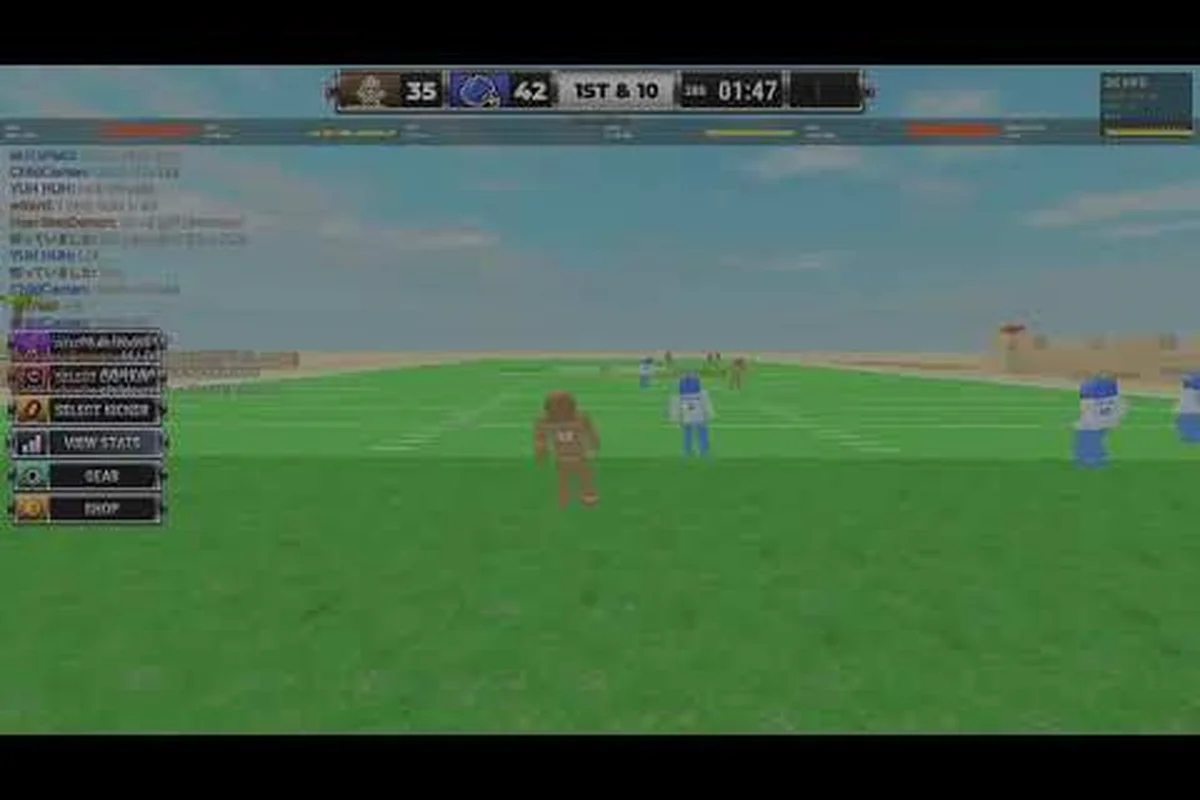
The right collision at the right moment can flip an entire drive. Ragdoll Football big hits are the difference between a stalled possession and a turnover that turns momentum, because the physics engine rewards defenders who read the snap, close the angle, and launch themselves with intent rather than panic. This guide breaks down how to land clean, ball-loosening collisions through proper timing, sprint leverage, and high-arcing dive reads, so every defensive snap becomes a shot at a fumble recovery or a momentum-killing knockdown.
Core Hit Mechanics Every Defender Needs
Before layering tricks on top, the underlying collision system has to feel natural. Ragdoll Football's physics are a stylized version of real gridiron contact, where mass, velocity, and angle combine into an impulse that determines whether a carrier goes down, jars the ball loose, or sails out of bounds untouched. The community has identified three pillars that separate casual taps from game-swinging collisions: approach angle, momentum transfer, and follow-through positioning.
Approach Angle and Momentum Transfer
A defender who runs straight at a carrier's chest almost always bounces off or gets trucked, because the carrier's forward speed partially cancels the incoming impulse. The strongest collisions happen when the defender approaches from the carrier's lead shoulder at a slight 30 to 45 degree angle, which converts lateral speed into a spin that destabilizes the runner's base. According to community testing on the Roblox platform, this angled approach increases fumble rate noticeably compared to head-on contact, especially against backs who have already committed to a cut.
-
Lead-shoulder contact generates rotation, which forces the carrier's grip to slip
-
Chase-down hits from behind create linear knockdowns but rarely jar the ball loose
-
Perpendicular collisions (carrier running left, defender arriving from the right) produce the cleanest launches because the vectors are nearly orthogonal
Follow-Through Positioning
Where the defender ends up after the hit matters as much as the contact itself. A defender who leaves their feet at the moment of impact often generates more impulse than one who tries to stay grounded, because the entire body mass becomes a projectile. This is the foundation behind every high-dive knockdown and every sprint tackle that launches a carrier three yards past the line of scrimmage. The trade-off is recovery time, because airborne defenders spend extra frames getting back to their feet, so the hit has to be worth the gamble.
Dive Tackles: The Foundation of Ragdoll Football Big Hits
The dive button, which is V on PC and B or Circle on console depending on platform, is the single most important tool for forcing fumbles and creating turnovers. Ragdoll Football dive tackles are not the desperation move many new players assume; they are a calculated commitment that trades standing defense range for a much higher collision impulse and a much wider hitbox at the moment of contact. Players who learn to read the snap and commit to a dive at the right depth consistently produce the loudest, most momentum-shifting plays on the field.
When to Commit to a Dive
Timing is everything. A dive that triggers too early leaves the defender sliding on the ground while the carrier runs past, and a dive that fires too late results in a glancing blow that barely affects the play. The sweet spot is roughly one to two yards in front of the carrier's path, so the defender's body arrives at the carrier's legs at the same instant the carrier's forward momentum is fully committed.
| Dive Timing Window | Result | Typical Outcome |
|---|---|---|
| Too early (3+ yards away) | Defender slides harmlessly | Carrier cuts inside, 5-10 yard gain |
| Slightly early (1-2 yards away) | Glancing leg hit | Carrier stumbles, possible 2-3 yard loss |
| Optimal (contact at legs) | Full body collision | Ball pops loose or carrier launched |
| Too late (carrier already past) | Whiff, no contact | Open field, potential touchdown |
Dive Reads Against Common Plays
Reading the offense before the snap turns random dives into calculated risks. Against a standard inside run, the dive should fire at the mesh point where the quarterback hands off, because the back is still gathering the ball and has not yet built full forward speed. Against a stretch play to the outside, the dive should wait until the carrier reaches the numbers, which is where the angle of pursuit naturally crosses the runner's path. Against a designed quarterback run, the defender should bait the QB into one extra step before committing, because over-eager dives against mobile quarterbacks routinely turn into 15-yard scrambles.
The community clip I BROKE EVERYONES ANKLES in RAGDOLL FOOTBALL shows several examples of well-timed dive tackles that jar the ball loose at the exact moment the carrier tries to cut, which is a useful visual reference for defenders still learning the contact window.
Sprint Tackles and Timing Tackles for Power Collisions
Ragdoll Football sprint tackle plays are the disciplined alternative to all-in dives, because they let a defender build maximum velocity before initiating contact while keeping their feet under them for a faster recovery. The sprint button (typically Left Shift on PC and the corresponding trigger on console) feeds directly into the momentum calculation, and a defender who arrives at full sprint generates noticeably more impulse than one jogging into the collision. The key is knowing when to release the sprint and trigger the tackle, because the contact frame is what determines the final power rating.
Reading the Carrier's Hip
Timing tackles in Ragdoll Football are less about reaction speed and more about visual cues. Experienced defenders watch the carrier's hips rather than the ball, because the hips telegraph direction changes a full step before the feet actually move. When the carrier's hips square up, the cut is coming, and that is the frame in which a well-timed sprint tackle turns a would-be juke into a fumble. When the hips stay sideways and the feet keep churning, the carrier is committed to a straight line, and a slightly delayed tackle maximizes the angle of pursuit.
| Visual Cue | Defender Read | Tackle Trigger |
|---|---|---|
| Hips square, feet shuffling | Cut imminent, attack lead leg | Fire at hip rotation frame |
| Hips sideways, head down | Straight-line power run | Wait one extra step, full speed |
| Carrier stutter-stepping | Hesitation, possible pitch | Hold, mirror, then commit |
| QB pump-faking | Throw read, not a run | Stay home, do not bite |
Sprint Leverage and Angle of Pursuit
The fastest defender does not always land the biggest hit. Sprint leverage matters more than raw speed, because a defender running parallel to the carrier at full speed can never close the distance, while a defender taking a 15-degree angle toward the carrier's near hip can intercept the path with less total distance covered. This is the geometry behind every sprint tackle knockdown clip that circulates on Roblox highlight reels, including the kind of ankle-breaking hits shown in Roblox Ragdoll football Bro got HEADTAPED. The defender is not actually faster than the carrier in most of these clips; they are simply taking a smarter angle that converges on the runner's path.
The mechanics behind these leverage hits are covered in more depth in the guide on Ragdoll Football body tackles and momentum hits, which focuses specifically on how mass and direction combine into knockdown power rather than glancing bumps.
High Dives and Launch Reads for Maximum Knockdown
The most visually spectacular plays in Ragdoll Football come from high dives, where a defender launches off the ground at an upward angle and collides with a carrier at chest or head height, producing a launch arc that can send the runner three or more yards through the air. These are the ragdoll football high dives that populate highlight reels, and while they carry higher risk than standard tackles, the payoff in field position and momentum is enormous. Landing a clean high dive on a receiver in the open field often ends the play entirely, and landing one on a running back near the line of scrimmage frequently produces an immediate fumble because the ball carrier's hands are still securing the ball when the impact arrives.
Setting Up a High Dive
A high dive is not a random commitment; it is set up by the previous two or three frames of positioning. The defender needs to be moving at full sprint, the carrier needs to be within roughly two body lengths, and the dive button must be pressed at the apex of the defender's stride. Pressing the dive button while standing still or while decelerating produces a low, slow arc that carriers can easily sidestep. The best high dives in the Best Ragdoll Football Moments compilations all share this same pre-contact build-up: full sprint, close the gap, then launch at the perfect stride.
| High Dive Scenario | Setup Required | Expected Outcome |
|---|---|---|
| Receiver crossing middle | Defender at full sprint, inside leverage | Receiver launched, ball pops up |
| RB near goal line | Defender in contain, timing the handoff | Possible fumble near end zone |
| QB scramble past markers | Defender in chase, angled pursuit | Launch sideline, stop the clock |
| Screen pass catch | Defender unblocked, read the catch | High arc knockdown, possible INT setup |
Risk and Reward of Going Airborne
Every high dive trades safety for spectacle. A missed high dive leaves the defender on the ground for a full second or more, which is more than enough time for a mobile quarterback to turn a broken play into a long touchdown. The defensive rule of thumb is to only commit to a high dive when the carrier is already in the defender's tackle box and a second defender is closing from the other side as a safety net. Solo high dives in open space are a calculated gamble that pays off in highlight compilations and burns the defense in regular play, so the decision has to be made with full awareness of the surrounding field.
Timing the Tackle Button Like a Hitstick
Players who come from Madden or NFL 2K often ask how to hitstick in Ragdoll Football, because the hitstick is the signature power-tackle input in those sim-style football games. Ragdoll Football does not have a literal hitstick input, but the same philosophy applies: the most powerful, ball-loosening collisions happen when the defender times the tackle button to the exact frame of contact, rather than mashing it as the carrier approaches. This is what experienced players call the "perfect tackle" window, and mastering it is the single biggest skill jump between intermediate and advanced defensive play.
Finding the Perfect Tackle Frame
The perfect tackle window opens roughly 0.1 to 0.2 seconds before contact, which on a 60fps Roblox client is about 6 to 12 frames of lead time. Pressing the tackle button too early produces a whiff, because the defender's hitbox has not yet intersected the carrier's. Pressing it too late produces a standing bump with no knockdown, because the carrier has already passed through the tackle arc. The ideal input fires the tackle animation at the exact frame the carrier's body enters the defender's hitbox, which is the frame that Ragdoll Football's physics engine treats as a high-impulse collision rather than a glancing contact.
-
Visual cue: the carrier's leg reaches its forward-most extension in the stride cycle
-
Audio cue: the subtle "lock" sound that the engine plays when the tackle animation connects
-
Feedback cue: the defender's screen shake spikes precisely at the contact frame
Translating Hitstick Instincts to Ragdoll Inputs
Players with a Madden background often over-commit to dives because the hitstick in those games rewards aggressive inputs, but Ragdoll Football's physics punish over-commitment more harshly. The translation is to treat the tackle button the way a hitstick would be used: tap, do not hold, and time the tap to the contact frame rather than the approach. Holding the button produces a long, telegraphed animation that carriers can read and sidestep, while a clean tap produces a quick, decisive collision that the carrier cannot react to in time. This is the same discipline covered in the deeper dive on Ragdoll Football advanced tackles and perfect timing, which walks through the full decision tree a defender should follow on every snap.
According to the Fumble rules overview, a fumble in real football is any loss of possession during a play, and the physics of Ragdoll Football translate that definition into a visual moment where the ball literally pops out of the carrier's hands and bounces on the turf. Defenders who learn the perfect tackle window produce those fumble moments far more often than defenders who spam the button, because the engine only treats a small subset of tackle animations as high-impulse collisions, and that subset is gated behind timing precision.
Putting It All Together: A Snap-by-Snap Big Hit Routine
Reading about mechanics in isolation only goes so far, because the real value of ragdoll football big hits shows up in how the tools combine across a single defensive series. A defender who layers dive reads, sprint leverage, and hitstick-style timing on a per-snap basis becomes a turnover machine, because the offense can never predict which tool is coming. Mixing high dives with conservative contain forces the quarterback to hold the ball an extra beat, which opens passing windows for the secondary and produces the kind of Interception opportunities that flip field position in a single play.
Sample Defensive Series
| Down & Distance | Defender Read | Best Hit Tool | Expected Result |
|---|---|---|---|
| 1st & 10 | Read QB eyes, mirror HB | Contain + sprint tackle | Minimal gain, force 2nd & long |
| 2nd & long | QB pressured, off-platform throw | Zone dive on the route | Possible INT, possible PBU |
| 3rd & medium | Carrier in open field | Hitstick-style tackle tap | Fumble or immediate stop |
| 4th & short | Goal line stand, packed box | High dive on the lead blocker | Goal line stop, turnover on downs |
| Red zone | End zone awareness, no deep routes | Prevent tackle, contain inside | Safety if tackled in own end zone |
Common Mistakes That Kill Big Hit Opportunities
The fastest way to neutralize a defense's big-hit potential is to over-pursue. A defender who chases every play from the snap ends up out of position on cutbacks, screens, and play-action, which is exactly when the offense wants to attack. The disciplined approach is to read the offensive formation first, identify the most likely ball carrier, and then commit to the angle that intercepts that carrier's path rather than the carrier themselves. Sprinting directly at the ball on every snap produces a lot of flashy collisions in the highlight reel but very few actual stops, because the offense can simply run away from the over-pursuing defender.
A second common mistake is committing to a high dive or a sprint tackle before confirming the snap. Defenders who jump early at the sound of the cadence routinely take themselves out of the play, and because the ragdoll physics send them flying several yards past the line of scrimmage, the recovery time is long enough that the offense can pick up chunk yardage before the defender is back on their feet. The counter is to hold the first step, read the offensive line's first movement, and only commit to a power move once the play direction is confirmed.
Frequently Asked Questions
What input do I use for ragdoll football big hits on PC versus console?
On PC, sprint is Left Shift, dive is V, and tackle is the left mouse button by default. On Xbox, sprint is the left trigger, dive is B, and tackle is the right trigger. On PlayStation, the layout mirrors Xbox with Circle in place of B. The full mapping reference is in the Ragdoll Football tackle button and controls guide.
When should I commit to a dive instead of a standing tackle?
Commit to a dive when the carrier is within two body lengths, has already committed to a direction, and a second defender is closing as a safety net. Standing tackles are safer in open space, while dives are higher-reward in tight windows near the line of scrimmage. Mixing the two keeps the offense guessing and prevents the dive animation from becoming a tell that offenses can read and punish.
How do I force more fumbles on contact?
Force fumbles by combining a sprint approach with a perfectly timed hitstick-style tackle tap rather than a held tackle button. The engine treats timed taps as high-impulse collisions that jar the ball loose, while held tackles produce lower-impulse standing bumps. Pairing the timed tap with a slight angle of pursuit toward the carrier's lead shoulder amplifies the rotation effect and makes the grip slip more dramatic.
Are high dives worth the risk in regular play?
High dives are worth committing to when the carrier is already in the tackle box and the defender has full sprint momentum. They are not worth the risk in open space, where a whiff leaves the defense out of position for several seconds. The rule of thumb is to save high dives for short-yardage, goal-line, and sideline-confinement situations where the carrier has limited escape angles.
Where can I see more examples of well-timed ragdoll football big hits?
The community highlight reels on YouTube, including the ones linked earlier in this guide, are the best reference for visual learners. Watching them at half speed helps defenders identify the exact frame at which the tackle input fires, and comparing multiple clips side by side reveals the consistent pre-contact build-up that all clean big hits share.