
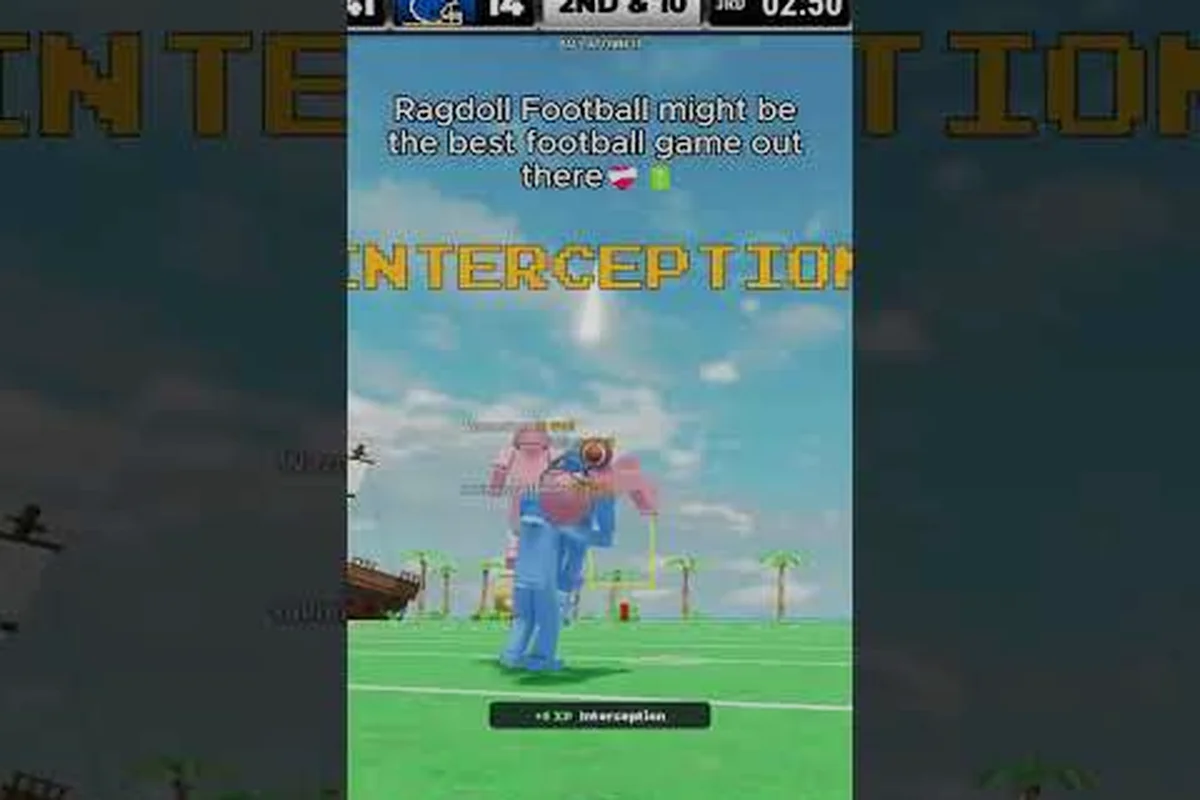
Ragdoll Football draw defense in play turns chaotic physics scrambles into controlled stops, and the difference between a walk-in score and a forced fumble usually comes down to pre-snap discipline. Smart defenders who read the snap, sell a soft shell, then crash downhill at the right moment can wreck an entire drive in a single collision. The trick is treating the ragdoll engine less like a glitch and more like a momentum system, because timing beats raw speed every time.
Reading the Pre-Snap Offense in Draw Defense
A draw defense in Ragdoll Football only works when defenders commit to the right look before the ball moves. The offense telegraphs almost everything in the half-second before the snap, and the side that reads it first gets to choose the collision angle. Timing that half-second read is also what separates clean open-field tackles from the kind of full-body collisions covered in our Ragdoll Football Big Hits breakdown, where the winning defender is always the one who had already squared up before the ball was out of the quarterback's hand.
Snap-Count Tells and Stance Clues
Watch the ball carrier's center of mass and the quarterback's hand position. If the QB is cradling the ball low with a short wind-up, the play is almost always a draw or a quick dive, which means a linebacker crashing the A-gap wins the race to the ball. Stacked receivers crowded near the line signal a max-protect running look, while spread formations with a single back tip pass first, run second. The pattern repeats across most ragdoll physics football games, and community clips consistently show the same tells holding up across patch cycles.
| Pre-Snap Tell | What It Signals | Defender Counter |
|---|---|---|
| QB hand low, short wind-up | Draw or quick dive | Crash A-gap at snap |
| 3+ receivers tight to line | Max-protect run | Pinch defensive line, fill gaps |
| Single back, spread receivers | Pass-first look | Hold edge, bait the throw |
| Fullback offset behind guard | Lead draw or trap | Spill to outside, force cutback |
The reads above are pulled from common community reports on the Roblox title, where defenders who sprint into position early tend to land first contact. A second tell worth memorizing: when a back flinches before the snap, the play is almost always a run, because pass routes need a clean release and most players only flinch on misdirection. Defenders can pre-load their dive on that twitch and still arrive on time because the ragdoll dive arc travels faster than a sprint-tackle approach.
Why Soft Shell Beats Blitz-Happy Defense
A common beginner mistake is sending every defender at the snap, which leaves huge cutback lanes for the ball carrier. The smarter approach is a soft shell that looks like pass coverage for the first half-second, then collapses once the run read confirms. Players who bait the throw with shallow drops create interception chances that flipping possession cold, and the same shell doubles as run support the instant the QB hands off. A balanced shell with two deep defenders and four box players covers most of the offense's menu, and the ragdoll physics make a clean box hit almost always jar the ball loose.
Linebacker Blitz Stunts and Run-Fit Discipline
Once the read is clear, the next layer of draw defense in Ragdoll Football is the stunt package. Stunts confuse the offense's blocking angles and free up a free rusher, which is the entire point of a linebacker blitz in a physics-driven sandbox.
A-Gap, B-Gap, and Contain Stunts
The three most common stunts players run are A-gap, B-gap, and contain. Each one attacks a different seam in the offensive line, and rotating between them keeps the offense guessing. Contain is the safest stunt because it funnels the ball carrier back into the box, while A-gap is the highest-reward play because a clean hit at full speed almost always forces a fumble.
| Stunt Type | Best vs. | Risk | Reward |
|---|---|---|---|
| A-gap crash | Draw, QB sneak | High (open cutback) | Forced fumble or TFL |
| B-gap loop | Inside zone, trap | Medium (hold the edge) | Free rusher, sack or stuff |
| Contain/edge | Sweep, toss, option | Low (run support) | Forces cutback into traffic |
| Delayed LB blitz | Pass first, run second | Medium (open hot route) | Free hit on QB or back |
Stunts only work if the rest of the front holds their gaps. If an edge defender crashes inside on a contain call, the ball carrier has a clear sideline lane and the stunt backfires. A good rule of thumb is to assign one gap per defender and trust the teammate to take the next one over, because the ragdoll collisions tend to scatter when two defenders converge on the same seam. Community testing on clips like the ones collected by Jaxdabearsfan's Best Ragdoll Football Moments shows that gap-disciplined fronts consistently force fumbles at a higher rate than freelance crashers.
Pre-Snap Communication Without Voice Chat
Roblox matches rarely have reliable voice, so defenders have to communicate through positioning. The cleanest trick is to crouch or stand at the line to signal the stunt, then sprint to the gap once the offense shifts. A defender standing upright at the line often means contain, while a crouch tends to read as blitz, and the offense has to react to the body language before the snap. It's a workaround, but it cuts miscommunication in half and lets the defense call stunts the offense never sees coming.
Goal Line Stand Tactics and Last-Second Plays
When the offense is one yard out, ragdoll football goal line stand defense becomes less about angles and more about raw collision volume. The field is too small for cutbacks, so stuffing the box and diving into the pile is the entire game plan.
Spacing the Pile at the One-Yard Line
Three defenders in a tight triangle absorb almost any solo push, while spread defenders get run over one at a time. The trick is to start the stand about two yards off the ball and let the carrier come to you, because meeting a forward-moving ragdoll at full speed usually bounces the defender backward. Letting the carrier run into a planted wall flips the momentum and gives the defense a clean shot at the ball.
| Goal Line Setup | Carrier Result | Defender Tip |
|---|---|---|
| Spread (3 wide) | Carrier picks a side, dives in for TD | Collapse inward, tight triangle |
| Tight triangle (3 stack) | Carrier bounced back, fumble risk | Hold the wall, don't overpursue |
| Goal-line blitz (5 rush) | Carrier swims through contact | Use only on obvious run looks |
| Edge contain only | Carrier cuts inside, short gain | Spill to the pile, don't tackle solo |
Players who run goal line stands consistently tend to win the momentum swing, because a stuffed run at the one is a bigger emotional hit than a 20-yard pass completion. The ragdoll physics make pile defense look messy on screen, but the underlying math is simple: more bodies in a small area means more collision checks, and more collision checks mean more fumble chances. Defenders who time their dive into the pile right before the carrier arrives tend to come up with the ball, and the goal line stand becomes a turnover instead of a touchdown.
The Last-Second Play
The ragdoll football last second plays category is its own beast, because the offense is usually running a desperation heave while the clock is melting down. Defenders who hold their zone until the ball is in the air, then break on the catch point, snag more picks than defenders who jump the route early. Late-game positioning is also the cleanest time to use a dive save, because the offense rarely expects a defender to launch horizontally across the goal line.
Note: community clips show that defenders who bait the QB into a throw by playing slightly off the receiver consistently come down with the interception, while defenders who swarm the ball end up colliding into each other and letting the receiver slip through.
The cleanest counter for a Hail Mary is to keep two defenders deep, one on each hash, and let the others crash the line. The deep defenders don't have to make a play on the ball; they just have to make sure no receiver gets behind them, because the physics arc on a ragdoll throw is unpredictable and a tipped ball often lands in a defender's lap.
Trick Plays on Defense and Advanced Tackle Timing
The final layer of ragdoll football advanced tackles is using trickery to bait the offense into a bad read. A well-timed fake can be worth as much as a clean hit, because it forces the ball carrier to commit to a direction they immediately regret.
Fake Blitz and the Disguised Contain
A fake blitz is the single most disruptive trick in a draw defense package. The linebacker sprints toward the line as if crashing, then peels back into coverage at the last second, which leaves the offensive line blocking air and the ball carrier running into a free defender. The key is to commit fully to the fake, because half-effort fakes get read instantly and leave the linebacker out of position for the actual play.
| Trick Play | Best Situation | Carrier Counter |
|---|---|---|
| Fake blitz, peel to zone | Pass first, run second | Hit the flat, read the QB's eyes |
| Delayed contain crash | Sweep, toss | Cut inside the moment the edge holds |
| Goal-line stack swap | Run from the 1 | Read the line movement, pick the seam |
| Late safety rotation | Play-action deep shot | Hold the route, sit in the zone |
The fake blitz works because it punishes the offense for blocking the right player, which is something most ragdoll football trick plays on defense rely on. Once the offense trusts a disguise, the linebacker can break on the ball or shoot the gap on the very next snap. Defenders who cycle through two or three different disguises per game tend to force more fumbles than defenders who run the same stunt every play, and the offense has to waste time at the line reading the look instead of running the play.
Perfect Tackle Timing and the Dive Save
Ragdoll football perfect tackle timing is the single biggest separator between average and elite defenders. A tackle that lands a half-second early bounces off, while a tackle that lands a half-second late gives up extra yards, and only the middle of the window produces the clean collision that forces fumbles. The window is roughly half a second in most matches, and learning to read the ball carrier's foot plant is the cleanest way to find it consistently.
| Timing Window | Defender Result | Carrier Result |
|---|---|---|
| Too early (pre-plant) | Whiff, ball carrier breaks tackle | Extra 3-5 yards |
| Perfect (on plant) | Clean collision, fumble chance | Stuffed at the line, turnover risk |
| Too late (post-plant) | Diving ankle tackle | Short gain, pile forms |
| Dive save from depth | Horizontal launch across the field | Goal line stop or TFL |
The ragdoll football dive saves technique is built into the same timing window, except the defender is launching horizontally instead of going for a body tackle. Dive saves are the cleanest tool for last-second plays near the sideline or the goal line, because the defender can cover ground that a sprint tackle cannot reach. Defenders who practice the dive on solo scrambles tend to land the timing within a few matches, and the payoff is a much higher fumble rate on contact.
Frequently Asked Questions
What is the most reliable pre-snap read in Ragdoll Football draw defense in?
The quarterback's hand position is the cleanest read, because a low cradle almost always signals a draw or quick dive. Defenders who crash the A-gap on that tell land first contact on most plays, and the ragdoll physics turn clean contact into fumbles. Pair the hand read with the back's stance for an extra half-second of reaction time.
How do you stop a goal line run with ragdoll physics?
Stack three defenders in a tight triangle two yards off the ball and let the carrier run into the wall. The collisions bounce the carrier back and create fumble chances that a spread formation cannot match. Avoid solo tackles at the one-yard line, because a single defender almost always gets run over by a forward-moving ragdoll.
When should a linebacker use a delayed blitz in Ragdoll Football?
A delayed blitz is best on obvious passing downs, especially third-and-long, because the offense is expecting the rush to arrive early. Holding the linebacker at the second level for one second longer than the protection reads almost always produces a free rusher. The risk is a hot route into the vacated zone, so the rest of the front has to hold their gaps for an extra beat.
Can dive saves work on passes or only on runs?
Dive saves work on both, but the timing window is tighter on passes because the ball moves faster than a ball carrier. Defenders who read the QB's aim-throw can launch a horizontal dive to break up a catch or snag a pick, and the ragdoll physics make a tipped ball often land in a teammate's lap. Practice the dive on running plays first, then graduate to pass coverage once the timing feels natural.
What's the best counter to a no-huddle offense in Ragdoll Football?
Hold the soft shell and trust the reads, because no-huddle looks rarely change the underlying play call. Defenders who sprint to their gap at the snap rather than trying to read the offense in real time tend to arrive in better position, and the offense has to burn a timeout to slow the defense down. A disciplined box beats a freelance crash every time, even when the offense is moving at full speed.