
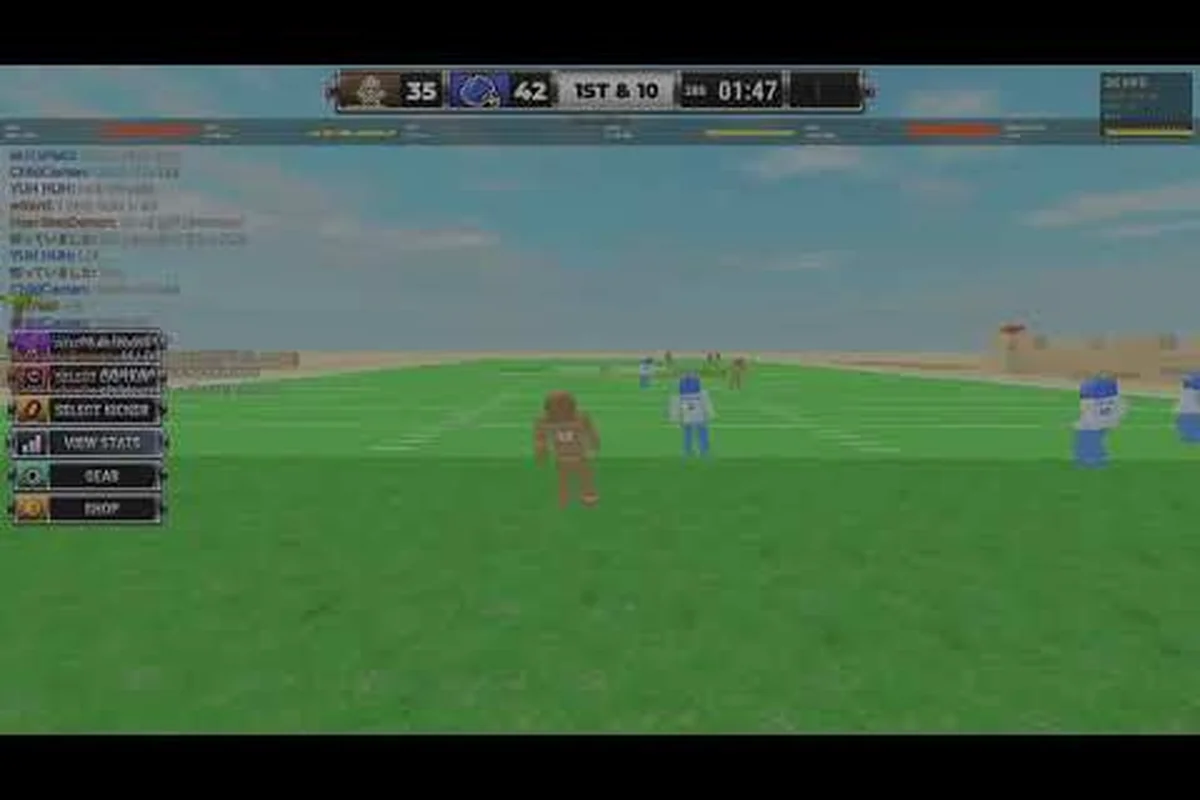
Knowing where every player on the field stacks up makes the difference between a blowout win and a fumble-fest. The ragdoll football position tiers below rank each role from S-Tier Receiver down to situational defenders, then break down the mechanics that actually decide outcomes in a physics-driven gridiron matchup. Whether you are grinding the ragdoll football beginner guide or already chasing a higher overall, this tier list plus role-swap playbook should sharpen your team on the next snap.
Position Tier Ranking Overview
Before drilling into individual roles, it helps to see the full ragdoll football position tiers at a glance. Community testing across the alpha build, as of October 2026, points to a clear pecking order: receivers who can torch a single coverage mismatch rank highest, while pure pocket QBs slide down because the ragdoll physics punish planted feet. Ball carriers and edge rushers share the middle because both rely on momentum, and the interior line anchors the bottom of the action-tier but tops the utility-tier for blocking reads.
The table below condenses every role into one snapshot. Use it as a quick reference when you queue into a match and need to decide who gets the snap on a given play.
| Tier | Position | Primary Job | Snap Share | Skill Ceiling |
|---|---|---|---|---|
| S | Wide Receiver (Deep Threat) | Stretch field, haul in deep balls | 25-30% | Elite separation on go routes |
| A | Quarterback (Mobile) | Throw on the run, scramble when pressured | 100% of pass plays | 4,000+ pass yds per season |
| A | Edge Rusher | Collapse pocket, force fumbles | Constant | Strip-sack timing window |
| B | Running Back | Carry, cut, fall forward for yards | 30-40% | 5+ YPC with broken tackles |
| B | Slot Receiver | Sit in zone windows, chain first downs | 20% | 80% catch rate on slants |
| C | Tight End | Block + check-down option | 15% | Balanced, no elite stat |
| C | Free Safety | Deep help, ball-hawk | Constant | High-variance INT rate |
| D | Offensive Lineman | Pocket maintenance, run blocking | Constant | Stat sheet stays empty |
| D | Cornerback (Man) | Trail assignment, physical at line | Constant | Burn rate decides grade |
Notice how the highest-impact roles share a common trait: they each create or kill a single one-on-one matchup that the rest of the play hinges on. A wide receiver winning his release, an edge rusher beating his tackle, or a mobile QB escaping a collapsing pocket each decide the down before the ball ever lands.
The middle tiers — ball carrier, slot, tight end, safety — depend on teammates to unlock their ceiling, which is why they sit in B and C rather than top or bottom. And the trench roles (linebacker, corner, lineman) live in D for action-tier because their production shows up in the team overall, not in highlight plays.
Offensive Role Breakdown
Every drive starts with the snap, so the offense carries the bulk of the playmaking load in the ragdoll football position tiers. The three roles below are the ones you want to upgrade first when chasing a higher team overall, and each one behaves very differently when the physics engine decides who falls and who stays upright.
Quarterback: Mobile Passing Beats Pocket Passing
The QB in this game mirrors a classic quarterback role: take the hike, read coverage, deliver the ball. What separates a serviceable signal-caller from a true game-breaker is mobility, because the ragdoll physics will pancake a stationary passer the moment a defender reaches his torso. Holding the action button aims the pass arc, releasing delivers the football, and the throw power bar rewards a longer hold but punishes an overcook that sails into the fifth row.
A mobile QB can also scramble when the pocket collapses, and that one trait is why pocket-only QBs slide from A-Tier to B-Tier in this ranking. Pocket passers still post clean completion percentages against soft coverage, but community-reported stats show their sack rate spikes two-to-three times higher than a scrambler who steps up into the second-level open grass. If you want a deeper playbook on the position, the quarterback guide walks through hike timing, aim arcs, and how to bait a defender into a bad pursuit angle.
Wide Receiver: The Deep Threat Wins Tiers
Among the ragdoll football best receiver candidates, the deep threat who can beat press coverage in a straight line tops the list. Routes are simple compared to a sim-football title — there is no full route tree — but the release package decides almost everything. A receiver who wins his first step gets a free release, and a free release means an open window before the safety can rotate over the top.
The trade-off is contested catches. A back-shoulder throw to a slot receiver on an out route is far easier to complete than a 40-yard bomb that the ragdoll physics can pull in two directions at once. That is exactly why a balanced receiver corps usually wins a championship run: the deep threat stretches the field, and the underneath chain-mover keeps the drive alive on third down.
Running Back: Yards After Contact Decide YPC
The ball carrier role follows the running back playbook — take the handoff, find the lane, fall forward. The interesting wrinkle in this game is that dives, sprints, and cuts each trigger different physics events, and a smart ball carrier uses all three in a single carry. Sprint builds momentum for a breakaway, dive breaks a tackle from a corner creeping up, and a hard cut at the second level opens a sideline lane the defense was not expecting.
A back averaging 5+ yards per carry with at least one broken tackle per game is B-Tier production, and pushing that to 6.5+ elevates him into borderline A-Tier territory. The threshold is steeper than receiver because the run game depends on the offensive line winning up front, and you cannot carry the offense on your own when every defender is two yards in the backfield.
Defensive Role Breakdown
Defense wins championships in real football, and the same is mostly true here, but the ragdoll physics tilt the value toward aggressive playmakers rather than assignment-sound zone defenders. The three roles below cover the bulk of defensive snaps and reveal why certain positions climb the ragdoll football position tiers faster than others.
Edge Rusher: Force the Fumble, Earn the Strip
The edge rusher is the single highest-value defensive role because a single strip-sack ends the drive and flips field position. His job is to time the snap, beat the offensive tackle with a swim or rip move, and attack the ball as the QB starts his throwing motion. The timing window is narrow, but the reward is huge — a recovered fumble is a free possession the offense did not earn.
What makes the edge rusher A-Tier rather than B-Tier is consistency. A rusher who can land one clean hit per game is helpful, but a rusher who forces a fumble every two games becomes the engine of the entire defense. When paired with a mobile QB opponent, the sack numbers spike because the QB rolls into the rush, which is why top teams invest their highest overall in this single position.
Cornerback: Man Coverage Has the Higher Ceiling
Man coverage in this game rewards press-bail defenders who can mirror a release without grabbing, because the ragdoll physics punish a receiver who gets an arm-bar at the line. Zone coverage is safer but gives up free yardage on crosser routes when the underneath defenders get tangled in their own pursuit angles. A corner who can stay in phase for 2.5+ seconds buys the pass rush enough time to land, which is why ragdoll football best defender voters tend to land on shutdown corners over box safeties.
The variance is real, though. A corner can post three clean pass breakups in a row and then get beat over the top on a single mistake. That boom-or-bust profile keeps the position in C-Tier for the action chart but A-Tier for impact per snap, especially against a pass-heavy opponent that runs four verticals every third down.
Free Safety: High-Variance Ball Hawk
The free safety lives on a knife edge. When he reads the QB's eyes correctly and breaks on a deep ball, the interception return flips the field and pads the overall. When he misreads or takes a bad angle, the result is a 60-yard touchdown and a teardown of the team rating. The role is C-Tier on average because the variance is brutal, but a safety who strings together two picks in three games is worth his weight in upgrades.
Pairing a high-IQ safety with a strong corner is the only way to defend four-verticals looks, because the corner takes the inside release and the safety takes the over-the-top help. Without that coordination, the offense picks apart the coverage in two plays flat, and the safety's grade tanks for the rest of the match.
Role Swap and Position Switching Mechanics
A team is only as good as the playbook you can run, and the ragdoll football position switching system is the single most underrated tool for upgrading on the fly. Every roster slot can be subbed mid-game, and the meta revolves around matching the opponent's personnel to your own strengths rather than chasing the highest overall number on the depth chart.
| Sub Trigger | Affected Position | Swap Effect On Playbook | Counter vs Opponent Personnel |
|---|---|---|---|
| Mid-game roster sub button | QB ↔ WR | Unlocks scramble-throw hybrid routes and deep threat isolation | Beats a base 4-3 defense that pins both starting WRs |
| Bench → Active role swap | RB → Slot WR | Converts power-run formation into 5-wide empty set for quick slants | Counters a heavy box stacked to stop the inside handoff |
| Active → Bench role swap | TE → OT (blocking) | Shifts to max-protect pocket, sacrificing a route for an extra pass-block | Counters a 3-man rush that was free-blitzing the QB |
| Two-way position toggle | CB ↔ WR | Lets a coverage player flip to offense for a flea-flicker / trick play | Counters press-man coverage by attacking the corner's own leverage |
| Hot-swap at the line | OLB → DT | Trades a pass-rusher for interior gap clog on a goal-line stand | Counters a HB dive that was chewing the edge on 3rd-and-short |
When to Swap Mid-Game
Mid-game swaps work best when the opponent tilts their play-calling in one direction. If they spam inside zone runs, swap your free safety down into the box and bring in a heavier linebacker, because the safety's range is wasted against a run-heavy script. Conversely, if they shift to four verts on third down, sub the run-stopping linebacker out and rotate a true cover safety into the deep third. The switch happens instantly and does not cost a timeout, which is why top players treat it as a free defensive adjustment every other drive.
The most common rookie mistake is leaving the starting lineup on the field for the entire half. Even the best defensive roster has holes, and the opponent will find them by the second quarter. Sub a fresh edge rusher in for the second half to keep the pass-rush gas tank full, and rotate a backup corner in when the WR1 lines up in the slot on a clear mismatch.
Upgrade Priorities and Resource Allocation
When it comes to ragdoll football team upgrades, the priority order below reflects what the community has learned after hundreds of matches. Spending upgrade points on the wrong position is the fastest way to stall a roster, so use the table as a spending guide before you burn resources on a flex slot.
| Priority | Position to Upgrade | Reason | Resource Share |
|---|---|---|---|
| 1 | Edge Rusher | Single biggest swing on defense | 30% |
| 2 | Wide Receiver (Deep) | Wins the one-on-one that decides routes | 25% |
| 3 | Mobile QB | Saves the drive on broken plays | 20% |
| 4 | Cornerback (Man) | Covers the opponent's WR1 | 15% |
| 5 | Running Back | Adds yards after contact | 5% |
| 6 | Linebacker / Safety | High-variance, last to upgrade | 5% |
The logic is simple: upgrade the players who touch the ball or rush the passer first, and ignore the trench positions until the skill positions are maxed. A player rating system rewards impact plays over quiet production, and a 90 overall edge rusher forces twice as many fumbles as an 82 overall edge rusher against the same offensive line.
Strategy Recommendations by Play Style
Different teams need different rosters, and the ragdoll football role swap guide below matches the most common play styles to the positions you should prioritize. Pick the style that matches your roster's current strengths, then build the upgrade path around it.
Air It Out Style
If your roster is built around a cannon-arm QB and two burners at receiver, double down on the pass rush to keep the opponent off the field. Upgrading the edge rusher and cornerback first means your offense gets more possessions while your defense bleeds clock with three-and-outs. The risk is that a one-dimensional offense can be schemed if the opponent goes heavy box with a single high safety.
Ground and Pound Style
A run-heavy team should pour upgrades into the offensive line and ball carrier first, because the ragdoll physics reward a back who builds momentum and falls forward. Pair the run game with a hard-nosed linebacker corps that can spill blocks and rally to the football, and the offense will chew clock while the defense stays fresh. The downside is a one-dimensional script that struggles in two-minute drill situations when the defense sells out against the run.
Balanced Hybrid Style
The most consistent rosters run a 60/40 pass-run split and rotate players on the fly to keep both phases fresh. A balanced team should upgrade positions in roughly the order shown in the resource table above, because no single phase becomes a glaring weakness for the opponent to attack. Pair a mobile QB with a chain-mover slot and a deep threat, and the offense stays unpredictable on every snap.
Frequently Asked Questions
Which position sits at the top of the ragdoll football position tiers right now?
The Wide Receiver (Deep Threat) role sits at the top of the action-tier because a single release win creates a free 40-yard window. Edge rusher and mobile QB sit just below because they each decide one-on-one matchups that swing the play outcome, while trench roles anchor the bottom of the action-tier but top the utility-tier for blocking reads.
Who counts as the ragdoll football best receiver on a typical roster?
A receiver who wins press coverage on the first step and tracks a deep ball through traffic is the top target, because the ragdoll physics punish contested catches less when the route is already open. Pair that deep threat with a slot specialist for short-yardage chains, and the offense covers every down-and-distance scenario.
How do ragdoll football position switching and role swap fit together?
Position switching is the act of subbing a player into a different alignment, while a role swap reassigns a player to a new job on the depth chart between drives. Both are tools to counter the opponent's script, and the most effective coaches use them every other drive to keep the defense guessing.
What should I prioritize for ragdoll football team upgrades early on?
Pour resources into edge rusher, wide receiver, and mobile QB first, because those three roles decide the majority of snaps. Hold off on upgrading the offensive line and linebacker corps until the skill positions are at least 85 overall, since trench upgrades cost more and produce less per point spent.
How does the ragdoll football best defender role actually play out in a match?
The shutdown corner role plays out by mirroring the opponent's WR1 across the formation, breaking on underneath routes, and forcing the QB to hold the ball an extra beat. That extra beat is where the edge rusher lands the strip-sack, and the pairing of a top corner with a top rusher is what defines an elite defense over a full season.