
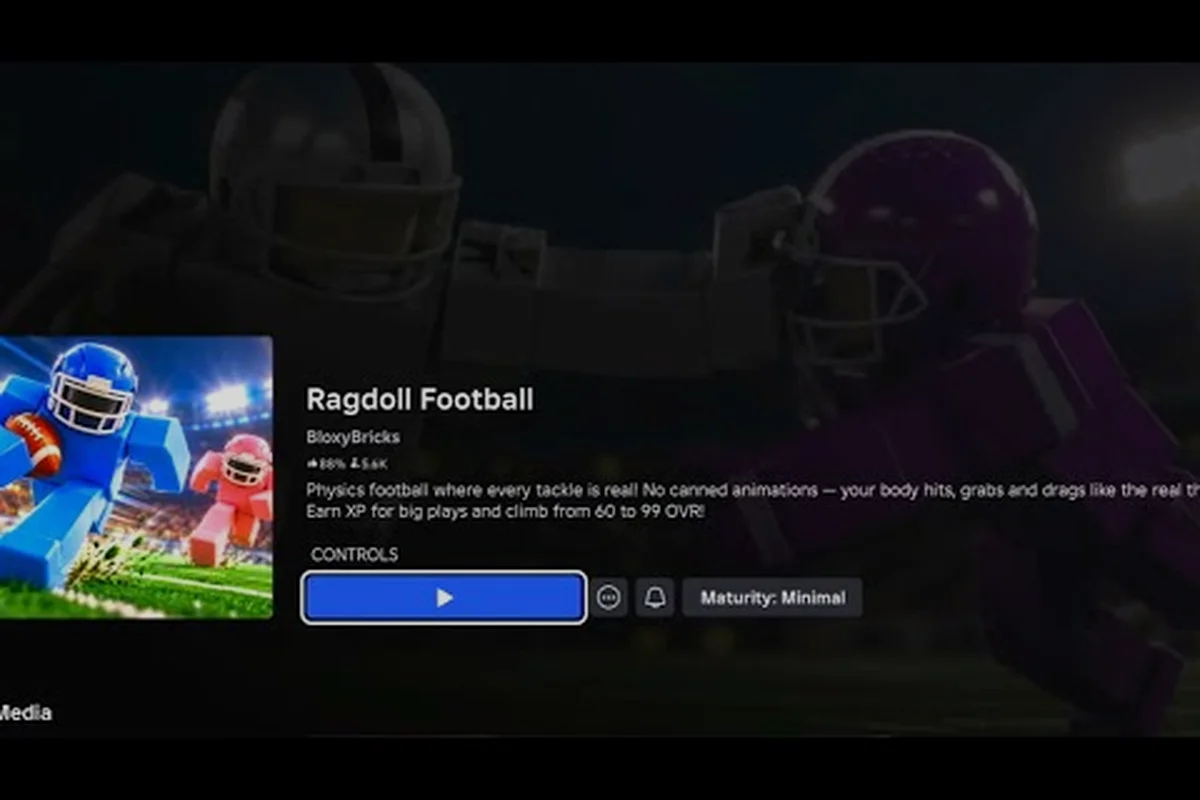
The quarterback is the single most influential role in any Ragdoll Football squad, because every offensive snap starts with the signal-caller taking the hike, reading the box, and choosing between a handoff, a designed throw, or a scramble. According to the standard breakdown on the Wikipedia quarterback overview, the position's job is to read coverage and decide where the ball goes, and that exact description maps cleanly onto how the role works in a physics-driven gridiron match. This guide breaks down pre-snap reads, throwing arcs, hand off calls, and the broader team roles around a QB so you can build the best team setup for your squad.
Reading the Field Before the Snap in Ragdoll Football
A great QB in Ragdoll Football wins games before the ball is even snapped. The pre-snap window is short, but the information density is high, and reading it well separates average signal-callers from the ones who consistently move the chains. The first thing to scan is the defensive front: count how many defenders are clustered near the line of scrimmage, because that number usually tells you whether to expect a heavy run look or a coverage shell.
Counting the Box and the Safeties
If you see 6+ defenders in the box, the run is likely covered, so flipping to a quick pass or play-action becomes the better call. If the box is light at 4 or fewer, the defense is showing pass, which means a hand off to a fast back can gash the edge before the linebackers recover.
| Defensive Look | Likely Coverage | Best QB Counter |
|---|---|---|
| 7 in the box | Run blitz or goal-line | Quick slant or hot route |
| 6 in the box | Balanced run/pass | Play-action with deep over |
| 5 in the box | Standard pass | Hand off or RPO read |
| 4 in the box | Prevent / deep shell | Streak or post route |
| Empty backfield | All-out pass rush | Quick three-step drop |
The secondary read is the safety depth. A safety sitting at 15+ yards means the deep ball is open, while a safety creeping into the box at 8-10 yards is begging for a crossing route to pop in the intermediate zone. This kind of pre-snap discipline shows up again and again in community-tested tips for new players, because the same reads translate regardless of which mode you queue.
Identifying Mismatches on the Outside
Once the front and the safeties are accounted for, scan the perimeter. If a single receiver is matched against a single defender with no help over the top, that's a man-coverage mismatch the QB should attack immediately. In a 2v2 or 3v3 lobby, every receiver has a one-on-one, so the question is not whether the matchup is favorable but which one is most favorable.
-
Look for the fastest receiver matched against the slowest defender — that's your deep shot.
-
Look for the biggest receiver matched against the smallest defender — that's your red-zone fade.
-
If two receivers are stacked on one side, the defense has to pick one, so the other is automatically open by geometry.
Throwing Mechanics and Arc Control in Ragdoll Football
Once you've made your pre-snap read and the ball is hiked, the real QB test begins: delivering an accurate throw under pressure, on the move, and with a physics engine that punishes mistimed releases. The throwing system in Ragdoll Football works on a hold-and-release model, where the QB holds the action button to set the arc and releases to fire.
The Hold-and-Release Arc System
Holding the throw button longer produces a higher, longer arc that gives receivers more time to get under the ball. Releasing early produces a fast, flat throw that zips to a receiver already in stride. The key is matching the arc to the route depth.
| Receiver Route | Recommended Hold Time | Arc Type | Target Window |
|---|---|---|---|
| Slant / quick out | 0.3-0.5 sec | Fast flat | Lead by 1-2 yards |
| Curl / comeback | 0.6-0.8 sec | Medium arc | Hit receiver at the break |
| Post / dig | 0.8-1.0 sec | High arc | Drop it over the LB, in front of the safety |
| Streak / go | 1.0-1.4 sec | Bomb arc | Lead by 5-8 yards downfield |
| Out-and-up | 0.7-0.9 sec | Layered arc | Place at receiver's second stem |
A common mistake new QBs make is holding the button too long on a short route, which causes the ball to sail over the receiver and into a defender's hands. A great signal-caller develops a feel for the hold time on every route, and that feel only comes from repetition. The Wikipedia wide receiver overview describes pass-catchers as players who "sprint into open space" and "track the throw," which is exactly the timing window a QB has to hit.
Throwing on the Move and Scrambling
The QB is not a statue. When pressure arrives, the play breaks down, and the QB has to either throw on the run, hand off to a trailing back, or scramble for the first down marker. The physics in Ragdoll Football make on-the-move throws harder, because the QB's momentum affects the release angle, so the trick is to set your feet briefly before releasing, even if you're rolling out.
-
Roll-out left, throw right: Drag the aim back across your body for a sideline comeback.
-
Scramble right, throw deep left: Lead the receiver aggressively because the ball travels across the field.
-
Pressure from the edge: Throw the ball away — sacks in this game can cause fumbles via physics collisions.
-
Open field scramble: Take the yards yourself; the QB is one of the faster players on the field.
Handoff Calls, the Ball Carrier, and Ragdoll Football Team Roles
Not every play should be a pass. The hand off is one of the most powerful tools in the QB's toolkit, especially when the defensive box is light or the offense is near the goal line. Understanding when to hand off — and to whom — is what separates a balanced offense from a one-dimensional one.
When to Hand Off Versus Throw
The decision tree is simple. If the defense shows pass, hand off. If the defense shows run, throw. That sounds reductive, but in a 3v3 or 4v4 lobby it's usually correct, because the small field size amplifies the cost of forcing a pass into a loaded box. The ball carrier, as described in the running back role overview, exists to "take handoffs, read blocks and gain yards with speed and power," and the Ragdoll Football version of that role rewards players who understand angle, momentum, and physics collisions.
| Situation | Best Call | Reason |
|---|---|---|
| Light box (4 or fewer) | Hand off | Numbers advantage in the run game |
| Heavy box (7+) | Quick pass | Avoid the stacked line |
| Goal line (inside 5) | Hand off or QB sneak | Physics dives are hard to stop short |
| 2nd and long (8+) | Play-action deep shot | Sell the run, hit the post |
| 3rd and short (1-3) | QB sneak or hand off | Lean on the run, convert the first down |
The Carrier's Job After the Handoff
Once the ball is out of the QB's hands, the carrier's job becomes threefold: protect the ball, find the lane, and fight for extra yards. Ball security means using sprint and dive inputs to keep the carrier upright through contact, because a physics-induced fumble at the mesh point is one of the most common turnovers in the game. For a deeper breakdown of carrier survival, the Ragdoll Football ball carrier tips cover the specific input patterns and dodge timing that turn a three-yard handoff into a fifteen-yard gain.
-
Sprint to the edge if the defensive end has crashed inside.
-
Cut back against the grain if the linebackers have filled the A-gap.
-
Dive forward if a defender has a clean angle and a big hit is coming.
-
Fall on the ball if a fumble has already started — the carrier can recover their own drop.
Squad Building and the Best Team Setup Around Your QB
The QB is the hub, but the offense only works if the surrounding team roles are built to support the throws and handoffs. A balanced squad in Ragdoll Football has at least one reliable receiver on each side of the field, a fast ball carrier in the backfield, and at least one hybrid player who can flex between roles when the situation demands it.
Building a Balanced Lineup
A good rule of thumb for the best team setup is to build around the QB rather than around the defense. Defense is reactive, but offense is proactive, and a strong signal-caller can paper over average defenders by controlling tempo and scoring quickly. Below is a sample lineup structure that works across most lobby sizes.
| Role | Primary Job | Secondary Job | Ideal Trait |
|---|---|---|---|
| QB | Reads, throws, handoffs | Scramble, take a knee | High throw power, decent speed |
| WR1 (X) | Streak, post, fade | Block on run plays | Top speed, big hit threshold |
| WR2 (Z) | Curl, slant, out | Jet sweep, end around | Quick acceleration, good hands |
| RB (Slot-back) | Hand off, dive, screen | Check-down target on broken plays | High carry, low fumble rate |
| Hybrid | Flex into any open spot | Goal-line carrier, 2-point conversion | Versatile, average across stats |
Role Swaps and On-the-Fly Adjustments
The roster doesn't have to be static. The role swap mechanic in Ragdoll Football lets a player switch positions between plays, which means a hybrid player can fill in at receiver when a teammate disconnects or when the offense needs a specific look. The key to effective role swaps is to make them before the play clock so the entire squad can re-align.
-
Swap to extra receiver in 3rd-and-long situations.
-
Swap to extra blocker in short-yardage and goal-line situations.
-
Swap to hybrid when the game is tied late and you need flexibility.
-
Never swap during the snap — the animation lock will leave a defender unblocked.
If you're building around the QB and want to understand how the rest of the field shapes the offense, the Ragdoll Football lineup guide maps out which positions carry the most value in each lobby size, and it's worth a read before locking in your squad.
Reading Defensive Rotations and Adjusting the Play Call
A QB who can read the defense after the snap is dangerous, because the offense can run layered routes that exploit late rotations. In a typical play, the QB will see the linebackers flow one way, the safety rotate to the other, and a hole open in the middle of the field. The job is to identify that hole within the first 1.5 seconds of the drop and deliver the ball before it closes.
Recognizing the Hole in the Zone
Zone coverage is vulnerable at the seams, where two defenders' responsibilities meet. If the linebacker is supposed to take the flat and the safety is supposed to take the deep third, the seam between them — typically 12-18 yards downfield — is open for a throw that neither defender can recover to. The QB's job is to throw the ball into that seam before the linebacker peels off the flat.
| Coverage Type | Weak Zone | Attack Read |
|---|---|---|
| Cover 2 | Middle of the field, 10-15 yds | Post or dig |
| Cover 3 | Deep middle, opposite the single high safety | Deep over |
| Cover 4 | Short middle, between the hashes | Shallow cross |
| Man-to-man | Anywhere the LB is matched on a WR | Pick a route, win the race |
| Blitz | Hot route or check-down | Throw before the rusher arrives |
Managing the Clock and the Drive
A QB's job isn't just to score — it's to control tempo. If the defense is gassed, the offense can grind out short runs and milk the clock. If the offense is behind, the QB has to speed up, call plays from the line, and trust the receivers to win quickly. The snap-to-whistle loop in Ragdoll Football rewards QBs who manage both ends of that spectrum.
-
Up by 1 score in the 4th quarter: lean on handoffs, run the clock.
-
Down by 2+ scores: no-huddle tempo, throw on first down, attack the deep ball.
-
Red zone (inside the 20): mix in play-action to freeze the linebackers.
-
Goal line (inside the 5): hand off or QB sneak, avoid the fade.
Frequently Asked Questions
How do I start as a quarterback in Ragdoll Football if I'm new to the position?
Start by queuing with a friend who can play receiver so you can practice the throw timing in a low-pressure environment. Spend the first few games only calling hand off plays, then add one designed pass per drive. The Ragdoll Football beginner guide walks through the early progression and the control layer every QB needs to know.
When should a QB hand off instead of throw the ball?
Hand off when the defense shows six or more defenders in the box, because that run-heavy look means a pass is likely covered. Throw on early downs when the box is light, because a defense showing pass is vulnerable to a quick run before the linebackers recover. Mixing both keeps the offense balanced and unpredictable.
What is the best throw arc for a deep pass in Ragdoll Football?
A deep pass works best with a high arc that you hold for 1.0 to 1.4 seconds, because the higher arc gives your receiver time to get behind the cornerback while the ball travels. Lead the receiver by 5 to 8 yards downfield and place the ball in front of the safety, not on the receiver's chest, so the catch happens in stride.
Can I swap roles mid-game, and how does that affect my QB rating?
Yes, the role swap mechanic is available between plays, and switching the QB out for a hybrid player reduces the offensive ceiling for that drive. The best practice is to lock the QB in for full drives and only swap during dead balls, lopsided scores, or when a teammate disconnects.
How does Ragdoll Football squad building improve QB performance?
Squad building improves QB performance by surrounding the signal-caller with receivers who win routes and a ball carrier who punishes light boxes. A team with one QB, two reliable receivers, and a fast running back will outscore a team with a great QB and three average teammates, because the throws and handoffs all have somewhere to go.