
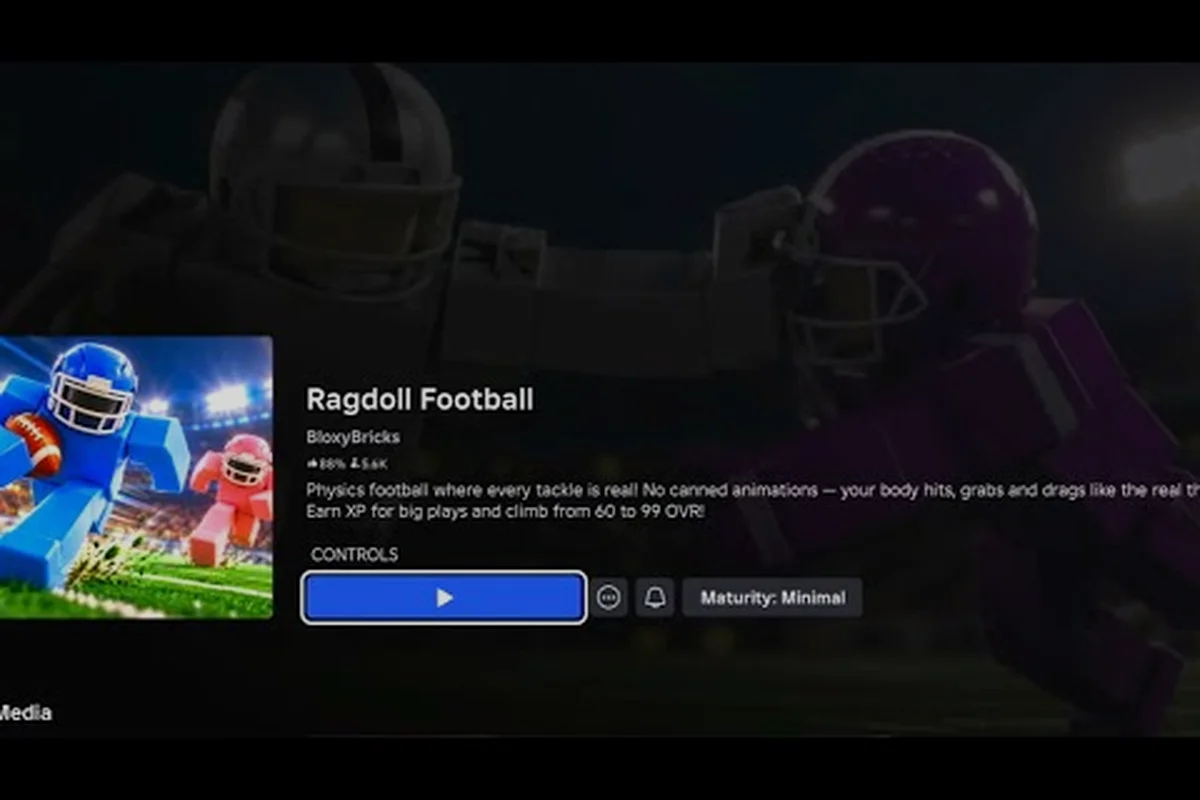
Picking the right slot on the field changes everything in Ragdoll Football. The physics-driven chaos rewards players who understand how Quarterback, Wide Receiver, Running Back, and Defender responsibilities translate into ragdoll collisions, momentum swings, and scoring drives. This guide breaks down every role, maps each onto solo and squad playstyles, and gives you a practical blueprint for assembling a roster that actually wins.
The best position to play depends on your strengths: do you prefer throwing, catching, trucking through tackles, or shutting receivers down on D? Below, you will get a clear comparison of the four core positions, a role-by-role breakdown with timing windows and physics-based mechanics, and a Ragdoll Football team building guide that ties roles to friend combos. Whether you queue solo or roll with a three-stack, the role map below is built to help you win more drives.
Ragdoll Football Roles Explained at a Glance
Every Ragdoll Football match splits players into two squads of four: three offensive skill positions plus one defender on each side. The offense runs through a snap mechanic where the QB takes the ball, aims a pass with the action button, and either throws or hands off. Wide Receivers sprint into open space, track the aimed throw, and haul in the ball before physics tackles arrive. Running Backs take handoffs, use sprint and dive to protect possession, and fight for extra yards when momentum dictates. Defenders collapse on the ball carrier with tackles, blocks, and pressure that can force a fumble or a sack.
Because ragdoll physics govern how limbs flail, how bodies collide, and how momentum carries through tackles, each role feels distinct even when the controller inputs look similar. The quarterback is the brain, the receivers are the legs, the running back is the power, and the defender is the disruption. A well-built squad covers all four jobs, so understanding the role map is the first step toward a real team guide.
Role Snapshot Comparison
| Position | Primary Job | Key Action | Best Player Type | Solo Viability |
|---|---|---|---|---|
| Quarterback (QB) | Read defense, aim passes, scramble under pressure | Hold to aim, release to throw | Patient, accurate, decisive | High — controls tempo |
| Wide Receiver (WR) | Run routes, catch, gain YAC | Sprint + jump catch | Fast reactions, spatial awareness | Medium — needs QB chemistry |
| Running Back (RB) | Take handoffs, break tackles, grind yards | Sprint + dive on contact | Aggressive, momentum-aware | Medium — needs offensive line |
| Defender (D) | Tackle, block passes, force fumbles | Sprint + tackle button | Predictive, disciplined, aggressive | High — single-player impact |
Role Strength and Weakness Matrix
| Position | Strengths | Weaknesses | Risk When Misused |
|---|---|---|---|
| QB | Controls pace, can scramble, unlocks whole playbook | Held ball is vulnerable; fumbles punish hesitation | Sacked repeatedly → drive dies |
| WR | Highest big-play potential, can break tackles in open field | Low catch radius early, dependent on QB accuracy | Dropped passes stall drives |
| RB | Eats clock, breaks arm tackles, controls short yardage | Reads depend on line; stacked boxes stall runs | Fumbled handoffs = turnovers |
| D | Stops the run, can swat passes, forces game-changing fumbles | Missed tackles lead to big plays; over-pursuit kills | Whiffed tackles = walk-in TDs |
These two reference tables give you the bird's-eye view before we dig into each role. Notice how the strengths and weaknesses form a natural triangle: a quarterback without a reliable receiver is a sitting duck, and a running back without a defender to free up field position gets stuffed on first down. This is exactly where the team building guide angle kicks in — the roles complement each other, and the best squads stack complementary skills rather than five copies of the same playmaker.
The Quarterback Role in Detail
The Quarterback in Ragdoll Football mirrors the classic quarterback role on Wikipedia: the signal-caller receives the snap, reads the defense, then either throws or hands off. In the physics-first Roblox gridiron, that means the QB takes the snap from under center, holds the action button to draw a pass arc, and releases to deliver the ball. A good QB never throws flat-footed because ragdoll tacklers will reach the release point and pop the ball loose. Reading open receivers on the move and scrambling when pressure arrives are the two skills that separate a casual QB from a drive-extending one.
QB Throwing and Scrambling Mechanics
| Mechanic | Input | Effect | When to Use |
|---|---|---|---|
| Pass Aim | Hold action button | Draws arc toward target | When receiver beats coverage |
| Pass Release | Release action button | Launches ball mid-arc | When arc reaches receiver's lead distance |
| Handoff | Tap action button near RB | Transfers ball to back | When box is stacked or defense bites on play action |
| Scramble | Sprint + left stick | QB runs as ball carrier | When pocket collapses, no route is open |
| Pitch | Double-tap action | Quick lateral to nearby receiver | When defenders over-pursue the QB run |
For solo queue, the quarterback is the highest-impact role because tempo and decision-making both live in the same pair of hands. A solo QB should default to short, high-percentage throws on first down, use the scramble as a pressure valve when the box collapses, and only swing for big plays on third-and-long. The skill ceiling is high because every snap demands three reads: where the pressure is, where the open receiver is, and whether a handoff beats the box. Players who enjoy controlling the clock and orchestrating drives will thrive here.
When the QB plays in a friend squad, the role shifts from "do everything" to "trust the playmakers." A pre-snap call from the friend group — like naming the route concept or signaling a handoff — keeps the offense unpredictable. This is where the Ragdoll Football team guide mindset pays off: roles are not jobs to grind; they are jobs to fit together. If your friend group has a QB who can aim and a receiver who can catch, you already have the bones of a top-tier offense.
Wide Receiver Routes and Catching Windows
The Wide Receiver role translates the wide receiver responsibilities described on Wikipedia into ragdoll physics. Receivers line up wide, run routes downfield, and attack deep areas. In Ragdoll Football, the receiver sprints into open space, tracks the aimed pass, and hauls in the ball before a defender's physics tackle arrives. A deep threat stretches the defense and creates room for the rest of the offense to breathe, so even when the receiver is not the primary target, the role still wins by pulling defenders away from the box.
WR Route Tree and Catch Timing
| Route | Release Angle | Best Throw Type | Window Length | Best Used Against |
|---|---|---|---|---|
| Slant | Inside 45° | Quick step pass | ~1.2 sec | Man coverage with cushion |
| Out Route | Outside 90° | Lead throw to sideline | ~1.5 sec | Zone defenses with flat defenders |
| Post | Inside 30° deep | Deep arc pass | ~2.0 sec | Cover 2 with over-pursuing CBs |
| Go Route | Vertical | Deep bomb | ~2.5 sec | Soft safeties, prevent shell |
| Drag | Inside shallow | Touch pass | ~1.0 sec | Blitz-heavy pressure |
The route tree is where a solo WR struggles: without a synced QB, routes break down because the timing window is tight and a slightly mistimed pass becomes a tipped ball or a missed catch. When you play with friends, the receiver role becomes lethal because you can call the route concept over voice chat and align the throw arc to the receiver's lead distance. According to community data, friend squads that pre-call slants and drags convert third-and-medium at noticeably higher rates than solo WRs, and the win-rate gap widens on longer routes where timing is everything.
For solo players who want to carry games from the receiver slot, the trick is to time the catch jump — pressing the catch button slightly early, while the ball is still in the arc, increases the catch radius in mid-air. Combined with route stems that attack the open grass (sideline on slants, deep middle on posts), even a solo WR can post respectable numbers.
Running Back Reads and Yardage Patterns
The Running Back role borrows the running back fundamentals from Wikipedia: the primary ball carrier who takes handoffs, reads blocks, and gains yards with speed and power. In Ragdoll Football, ball carriers use sprints, dives, and momentum to protect possession, cut away from defenders, and fight for extra yards once physics collisions decide whether the run continues. A good RB turns a three-yard cloud into a fifteen-yard gain by reading the line, hitting the right gap, and keeping the legs moving through contact.
RB Run Concepts and Success Rates
| Run Concept | Blocking Pattern | Best Box Look | Average Gain (community) | Risk |
|---|---|---|---|---|
| Inside Zone | Drive blocks | 7 in box | 4–6 yds | Stuffed at LOS |
| Outside Zone | Reach blocks | Edge defender set | 5–8 yds | Cutback tackle for loss |
| Power | Pulling guard | Light box, 6 men | 3–5 yds | Fumble on bad handoff |
| Counter | Fake handoff, pull | Aggressive pursuit | 6–10 yds | Misdirection misread |
| Draw | Delayed handoff | Pass-rush lean | 7–12 yds | Sack if read too late |
In solo queue, the running back is a high-variance role because the offensive line is computer-controlled and the box can stack eight men at any moment. Solo RBs should hunt for cutback lanes, use the dive to break the first tackle, and accept three-yard gains as a win on early downs. In a friend squad, the RB role becomes the offensive chain that ties the QB and the receivers together: a successful play-action fake freezes the linebackers, opens the deep shot, and lets the receiver run free.
Defender Tactics and Force Plays
The Defender is the only non-offensive role and the most disruptive single-player position in Ragdoll Football. Defenders collapse on the ball carrier with tackles, block passes at the line, and force fumbles through well-timed physics hits. Because the offense runs three skill positions and the defense fields only one defender, that single defender's reads and timing decide whether the drive stalls or scores.
Defender Read Progression
| Down & Distance | Primary Read | Secondary Read | Tackle Type | Goal |
|---|---|---|---|---|
| 1st & 10 | Box count, RB depth | QB drop depth | Form tackle | Force inside run |
| 2nd & long | WR release | QB scramble lane | Dive + swat | Force incompletion or sack |
| 3rd & short | Goal-line lean | Play-action fake | Power tackle | Stop at LOS |
| 3rd & long | Route concepts | Pass arc | Jump swat | Tip or INT |
A solo defender can swing a game because every snap runs through them. The defender should read the offensive line first — if the line drops into pass protection, the play is a pass; if they fire forward, expect run. According to community testing, defenders who bait the QB into early throws by squatting on routes convert more picks than defenders who chase the play. That bait-and-punish approach is the single best technique for solo players, because it turns the defender's read into the offense's mistake.
Building a Squad That Wins With Friends
Playing with friends is where Ragdoll Football shifts from arcade chaos to coordinated football. The team guide mindset treats each role as one instrument in a small ensemble, and the friend group that rehearses two or three concepts per drive will outscore a pickup squad of equally skilled randoms. This is also where the team building guide angle becomes practical: instead of choosing one "best" position, you pick a set of roles that cover the field together.
Friend Combo Role Pairings
| Friend Combo | Roles | Strength | Weakness | Best Strategy |
|---|---|---|---|---|
| QB + WR | Pass-heavy | Vertical stretch, big plays | Predictable if one-note | Mix slants with go routes |
| QB + RB | Balanced | Tempo control, play-action | Receiver becomes target on every pass | Use RB as outlet, motion into flat |
| WR + WR | Chaotic | Misdirection, double moves | No QB chemistry if randoms | Stack one side, switch releases |
| RB + D | Old-school | Run game + lock-up D | Passing offense limited | Grind clock, force opponent into long yardage |
| QB + RB + WR | Full offense | Three-phase attack | Defender role missing | Set defender on D, rotate on turnovers |
| Full 4-stack | Coordinated | Every play callable | Coordination overhead | One player calls plays, others focus on execution |
The full 4-stack is the gold standard for friend groups because one player can call the play concept while the other three execute their assignments. A common pattern is to assign the most patient player to QB, the most aggressive player to RB, the player with the best spatial awareness to WR, and the most disciplined player to D. When the squad rotates roles after turnovers, every player gets a feel for each responsibility, which makes the team harder to scout because the playbook looks different every drive.
For players running a three-stack (three friends plus one random), the most reliable setup is to take QB, RB, and D, and let the random fill WR. This setup keeps the offensive engine in friend hands and gives the random receiver clear go routes to run, which raises the floor of the whole team. Players running a two-stack should pick QB + WR and let randoms fill the other spots, because the QB-WR timing connection is the single biggest swing factor in any offense.
Solo Queue Survival and Role Swaps
Solo queue in Ragdoll Football is the most volatile way to play because four random players must run a coordinated offense with no voice chat. The single biggest mistake solo players make is locking a role they cannot carry. Instead, treat solo queue as a role rotation challenge where you adapt to whatever teammates you draw.
| Situation | Best Solo Role | Reason | Fallback |
|---|---|---|---|
| Randoms are aggressive | Defender | Convert turnovers, stop the bleeding | WR if defense is already covered |
| Randoms are passive | Quarterback | Take tempo into your hands, force action | RB to grind clock |
| Score is close, late game | Quarterback | Control the two-minute drill, no fumbles | Defender if offense is rolling |
| Teammates pick QB first | Wide Receiver | Be the safety valve, demand the ball | RB if no QB available |
| Need a momentum swing | Running Back | Break a big run, flip field position | Defender for a stop |
A solo player who masters all four roles will outrank a solo player who only plays one. The reason is simple: matchmaking in Ragdoll Football is role-blind, and your team comp changes every game. The player who can carry as QB on one match and as D on the next will climb faster than the one-trick pony who locks QB every queue.
Frequently Asked Questions
What is the Ragdoll Football best position to play for solo queue?
For solo queue, the Quarterback is the best position to play because it controls tempo, calls the offense, and limits the number of variables outside your control. If your teammates are passive or uncoordinated, the QB can force the action by aiming short passes, scrambling under pressure, and accepting the handoff only when the box is light. A solo QB with good aim and patience will carry more games than a solo WR or RB, because the defense is the only other position that touches the ball on every snap.
Which role is the easiest to learn for new players in Ragdoll Football?
The Running Back is the easiest role to learn because the inputs are simple: take the handoff, sprint, and use dive to break the first tackle. New players can contribute on their first drive without needing route knowledge or pass-arc skills, and the role forgives timing errors because the ball is already in your hands at the snap. Once a new player is comfortable with RB mechanics, the natural next step is to learn WR routes, then QB reads.
How do I play Ragdoll Football with friends effectively?
The best approach to playing with friends is to assign roles by personality: give the most patient player the QB, the most aggressive player the RB, the player with the best reaction time the WR, and the most disciplined player the Defender. Once roles are set, call two or three play concepts in voice chat before each snap so every player knows their assignment. According to community reports, friend squads that pre-call plays convert third downs at a noticeably higher rate than randoms, because the timing window on routes and pass arcs is much tighter when reads are pre-loaded.
Should I switch positions mid-game in Ragdoll Football?
Yes, switching positions mid-game is a strong tool, especially in friend squads where role swaps keep the offense unpredictable. In solo queue, role swaps work best after a turnover or at halftime, because the swap itself is a fresh start that lets you reset mistakes from the first half. The most common mid-game swap in high-level play is WR to RB after a successful passing drive, because the defense will cheat toward the pass and the run game opens up.
Does the best position change with squad size in Ragdoll Football?
Yes, the best position scales with squad size. Solo players should default to Quarterback or Defender because both roles control the outcome of every snap, while two-stack friend combos should focus on QB + WR to lock in the timing connection. Three-stack groups are strongest with QB + RB + D because that combo covers tempo, ground game, and stops, and a full four-stack can run any rotation because all four roles are covered by friends. Pick the role that fills the gap your team comp leaves open, not the role you personally enjoy most.