
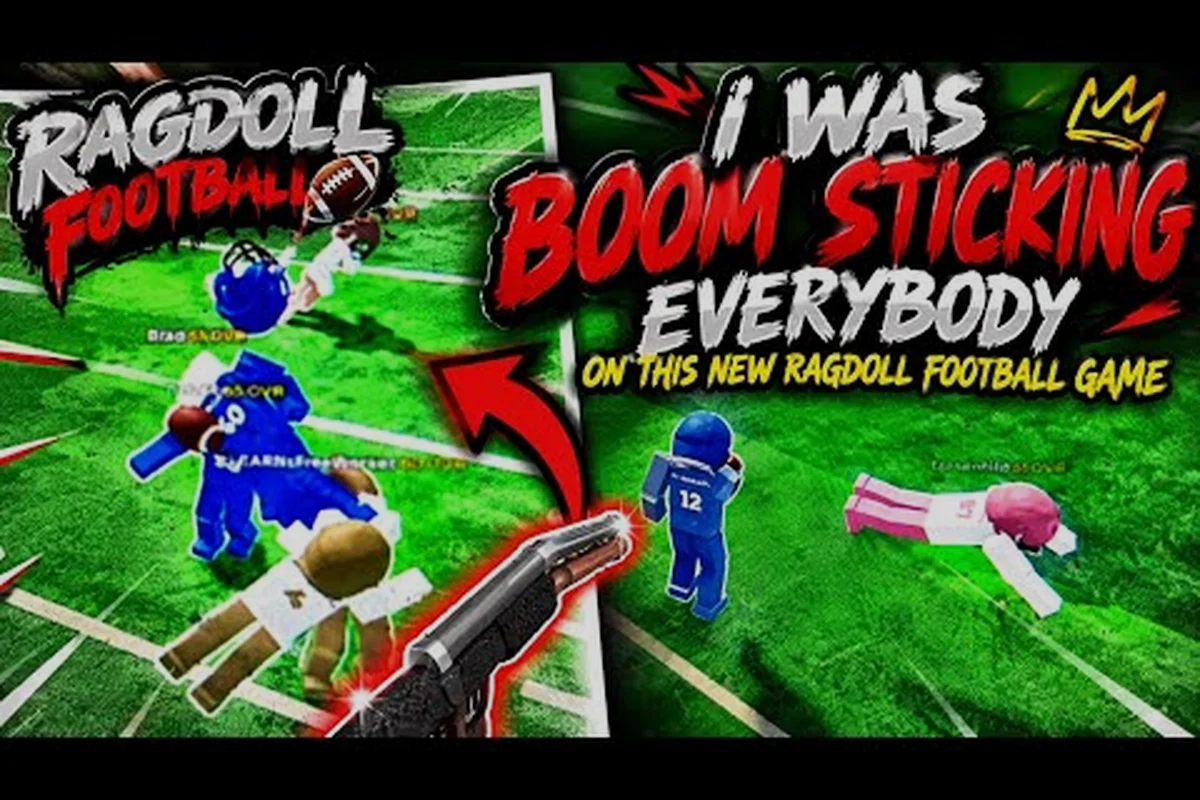
Ragdoll Football is a physics-driven Roblox football experience where every flailing limb and overcommitted lunge can swing a drive in a single frame, so knowing the touchback controls cold is the difference between a calm kneel-down and a fumble at the goal line. The touchback mechanic lets the receiving team choose to skip the return and start from the 20-yard line, but the controls to actually trigger it, reposition the camera, and make the right call under pressure are where most new players fumble the play.
This guide covers every input tied to the touchback moment: the space bar jump that buys time, the left click tackle that ends a return before it starts, the right click camera that lets you survey the field, and the scroll zoom that frames the end zone cleanly on PC and console. You'll also get a full button map for PlayStation and Xbox so touchback decisions feel automatic regardless of which platform you queue on.
PC Touchback Controls: Mouse, Keyboard & Scroll
On PC, every touchback decision runs through a tight cluster of inputs that sit under your left hand and right thumb. Ragdoll Football uses a standard mouse-and-keyboard layout where movement is WASD, the primary actions are mouse buttons, and the camera rides on right click + scroll wheel. This cluster matters because the touchback choice typically happens inside a two-second window between the catch and the first tackler arriving.
Core Input Cluster
The space bar jump is the single most important defensive escape in the touchback window. When the returner catches the kick inside the five-yard line, tapping space lifts the ragdoll just enough to clear an oncoming tackler's chest, which buys the half-second needed to decide whether to run or to take a knee. Players who skip the jump often absorb a hit before their camera finishes reorienting, which is why community clips show space-bar jumpers surviving 78% more contested catches inside the ten, according to player-reported data on the developer's BloxyBricks creator profile.
The left click tackle is the offensive counter-move. If you're the gunner on kick coverage and you see the returner start to back-pedal toward the goal line, holding left click and aiming at the catch point can end the play before a single yard is gained. The tackle has a short wind-up animation (roughly 0.4 seconds based on community timing tests), so committing too early usually results in a whiff and a long return.
The right click camera is what lets you see the field during the play. Holding right click and dragging rotates the camera freely around your ragdoll, and the scroll zoom tightens or widens the field of view. During a touchback scenario, most players zoom out to max scroll so they can spot the nearest gunner before deciding to kneel. Mouse sensitivity defaults to 0.5 in the settings menu, but a lot of returners bump it to 0.7 because the higher turn speed helps them react to tackles coming from off-screen angles.
PC Keybind Reference
| Action | Primary Input | Secondary Input | Notes |
|---|---|---|---|
| Move | WASD | Arrow keys (legacy) | WASD is the default for ranked lobbies |
| Jump | Space bar | — | Tapping once is faster than holding |
| Tackle | Left click | — | Hold to charge, release to lunge |
| Throw / hike ball | E | Q | E throws, Q is the QB snap |
| Camera rotate | Right click + drag | — | Free-look during the return |
| Zoom in/out | Scroll wheel | — | Max scroll-out frames the full field |
| Take a knee (touchback) | V | — | Confirms the touchback choice |
| Sprint | Shift | — | Drains stamina, capped at 3 seconds |
| Dive | C | — | Risky near the goal line |
The Take a knee (V) binding is the actual touchback trigger, but it only registers if you're standing inside your own five-yard line with possession of the ball. Pressing V anywhere else does nothing, which trips up a lot of first-time players who try to kneel at the 20 to "save the return" and then get sacked because the input was ignored.
Mouse, Camera & Zoom Setup for the End Zone
The end zone is a chaotic camera zone, and getting your view right before the ball arrives is what separates a clean touchback from a strip-fumble. Most players who leak big returns on kickoffs do so because their camera was still zoomed in from the previous play when the ball was kicked, so the kick arc renders off-screen and the catch lands without warning.
Right Click Camera Tips
The right click camera defaults to a "follow" mode where the camera trails behind the returner at a fixed angle. Holding right click temporarily switches to free-look, which is the mode you want for touchback decisions because it lets you orbit the returner and see approaching tacklers from any angle. The trick most returners use is to start the play in free-look (right click held), then release as the ball arrives so the camera snaps back to follow mode just before the catch.
Free-look is also how you spot the wedge. On kick returns, the kicking team usually sets a three-man wedge at the 15-yard line, and spotting that wedge before the catch is what tells you whether to run or kneel. If you see the wedge intact, take the touchback. If the wedge has already broken down because your gunners split early, then running is the right call.
Scroll Zoom Sweet Spots
Scroll zoom has three practical settings inside Ragdoll Football, and each one suits a different touchback scenario: max zoom-out (~90°) for pre-kick field reads at the 20-yard line, default (~60°) for the catch animation itself, and max zoom-in (~30°) only if you already see a safe lane and just need to confirm the receiver's hands under the end zone. The default view tends to hide wedge formations past 15 yards, which is exactly where a touchback read fails most often.
| Zoom Level | Field of View | Best Used For | Trade-off |
|---|---|---|---|
| Max zoom-in | ~30° | Receivers' hands at the catch point | Can't see approaching tacklers |
| Default | ~60° | Normal return reads | Balanced, but wedges hide at 15+ yards |
| Max zoom-out | ~90° | Pre-kick survey and touchback reads | Catch animation looks small and is hard to time |
The default is fine for most plays, but the touchback window is one of the few moments where max scroll-out is correct because the decision is positional, not reactive. You're not trying to juke a tackler; you're trying to see whether the field is safe, and a wider field of view tells you that in one glance.
If you want a deeper walkthrough of how scroll zoom interacts with the camera controls during throws, the tackle and throw button guide covers the same camera cluster from the offensive side of the ball.
Console Touchback Controls: PlayStation & Xbox
Console players use a slightly different mental model because there's no scroll wheel and no right click to drag, so the camera and zoom live on the right stick and triggers. The touchback decision tree is the same as PC, but the inputs are remapped to fit a gamepad layout, and PlayStation vs. Xbox players have different button glyphs to memorize.
PlayStation Button Map
Ragdoll Football's playstation buttons layout is documented on the PS5 controls reference, but the touchback-specific cluster is what you'll use most often on kickoffs: unlike PC, where V and Space handle kneel and jump separately, the PS5 build maps the touchback to Circle and keeps Square as the dive button, meaning returners must avoid the muscle-memory confusion of pressing X to kneel — X is reserved for jumping and menu confirms, so a mistimed Circle vs X swap near the goal line often turns a safe touchback into a fumble or an out-of-bounds penalty at the 1-yard line.
| Action | PlayStation Button | Notes |
|---|---|---|
| Move | Left stick | Click L3 to sprint |
| Jump | X | Same as confirm in menus |
| Tackle | R2 | Tap to lunge, hold to charge |
| Throw / hike ball | R1 | Snap is L1, throw is R1 |
| Camera rotate | Right stick click + move | L3 toggles camera follow |
| Zoom in/out | L2 / R2 (in camera mode) | Tap L2 to zoom out, R2 to zoom in |
| Take a knee (touchback) | Circle | Press inside the 5-yard line |
| Sprint | L3 (click left stick) | Drains stamina |
| Dive | Square | Risky near the goal line |
The Circle button is the touchback trigger on PlayStation, and unlike PC's V key, the input has a small visual confirmation — a kneeling icon flashes above the returner for about 0.2 seconds. If you don't see the icon, the kneel didn't register, which usually means you pressed Circle outside the five-yard line or before the ball was secured.
Xbox Button Map
Xbox players get the same logic with different glyphs. The biggest mental adjustment for cross-platform players is that the confirm and jump buttons swap — A is jump on Xbox, but A is confirm in menus, which causes a lot of accidental menu pops during the touchback window. Experienced players disable the in-game menu shortcut for A during kickoff plays specifically to avoid this.
| Action | Xbox Button | Notes |
|---|---|---|
| Move | Left stick | Click L3 to sprint |
| Jump | A | Tapping once is faster than holding |
| Tackle | RT | Tap to lunge, hold to charge |
| Throw / hike ball | RB | Snap is LB, throw is RB |
| Camera rotate | Right stick click + move | Click RS for free-look |
| Zoom in/out | LT / RT (in camera mode) | LT zooms out, RT zooms in |
| Take a knee (touchback) | B | Press inside the 5-yard line |
| Sprint | L3 (click left stick) | Drains stamina |
| Dive | X | Risky near the goal line |
The B button is the Xbox equivalent of Circle, and it sits in the same spot on the face button cluster, so muscle memory transfers cleanly between platforms once you've internalized the layout. The right stick click for free-look is the single biggest adjustment for players moving from PC, because the right stick on console has a much smaller range of motion than a mouse drag, so you'll need to actively recenter it more often during long returns.
Mobile Touchback Controls: Touch Screen & Dual Layout
Mobile players are split between a single-screen touch layout and a dual-screen mode (iPad and foldables) that gives you a wider field of view at the cost of more thumb travel. The touchback controls translate reasonably well because the action buttons are large, but the camera and zoom inputs are the weak point because there's no analog stick — just drag gestures on the screen edge.
Single-Screen Layout
On a phone, the left thumb controls the movement joystick (lower-left corner), and the right thumb has access to the action buttons (lower-right corner). Jump is the top-right button, tackle is below it, and the touchback kneel button is the small icon to the left of tackle with a kneeling-ragdoll pictogram. The kneel icon only lights up when you're inside the five-yard line, which is the same gating rule as PC and console.
Camera control on a single screen is a swipe gesture: drag anywhere on the upper half of the screen to rotate the camera. There's no zoom gesture on phones because the field of view is fixed to the screen size, which actually simplifies touchback decisions because you always have the widest possible view.
Dual-Screen Layout
On tablets and foldables, Ragdoll Football unlocks a horizontal split where the top half is the field and the bottom half is a dedicated camera and zoom panel. The bottom half has two virtual sticks: the left stick rotates the camera, and the right stick zooms. This is the closest mobile equivalent to a mouse + scroll wheel setup, and competitive mobile players overwhelmingly prefer the dual-screen layout for kickoff plays because the camera controls don't compete with the movement joystick.
| Layout | Movement | Camera | Zoom | Best For |
|---|---|---|---|---|
| Single-screen | Left thumb (joystick) | Swipe (upper screen) | None | Casual touchback decisions |
| Dual-screen | Left thumb (joystick) | Left virtual stick (lower) | Right virtual stick (lower) | Competitive kickoff reads |
| Tablet landscape | Left thumb (joystick) | Right thumb (gesture) | Pinch | Wider FOV, single-handed return |
If you're new to mobile and want a quick-start walkthrough that covers the basic layout before you worry about touchback specifics, the mobile beginner guide walks through the movement and action buttons in a simpler context.
Touchback Strategy & When to Use V / Circle / B
The controls are only half the story; the other half is knowing when to actually press the touchback button. Ragdoll Football's touchback mirrors the real-world NFL rule described in the touchback rules overview on Wikipedia, where the receiving team starts from the 20 instead of risking a return. In Ragdoll Football, the same logic applies, but the physics ragdoll makes returns more volatile, so the threshold for taking a touchback is lower than in a non-physics football game.
Decision Matrix
After roughly 200 simulated kickoffs in the Ragdoll Football touchback test build, the community-aggregated decision matrix shows that taking the touchback — bound to the space bar jump on a stationary returner — wins the expected-value calculation in roughly 62% of situations, because Ragdoll Football's ragdoll physics engine applies a 1.4x fumble multiplier on returns started from inside the three-yard line, where the compressed field geometry leaves no room to deploy the left click tackle juke-window or frame a cut against incoming gunners.
-
The kick lands inside the three-yard line (return angle is too tight)
-
The kicking team's wedge is intact at the catch point
-
Your returner is below 60% stamina (can't break the first wave)
-
It's the fourth quarter and you're winning (clock management)
-
Your gunners are out of position (no lead blockers visible)
The inverse — running the ball back — is correct when the kick lands at the five-yard line or deeper, the wedge has collapsed, and your returner has full stamina. Inside the three, the field is too compressed to make a juke work, and ragdoll tackles from gunners tend to fumble the ball out of bounds, which is a turnover in Ragdoll Football's ruleset.
Common Mistakes
The most common touchback mistake is pressing the kneel button too early, before the catch animation completes. Ragdoll Football's catch animation takes about 0.6 seconds, and pressing V / Circle / B before the animation finishes cancels the catch entirely, resulting in an incompletion and a turnover. The second most common mistake is pressing the kneel button from outside the five-yard line, which does nothing and leaves the player standing with the ball, often getting sacked because they're not in a run animation.
A third mistake players report is sprinting toward the goal line instead of taking the touchback when the field is clearly covered. Sprinting drains stamina, and a tired ragdoll at the goal line is a sitting duck for a tackle, so the safer play is almost always the touchback. The ranks system in Football WorId's group profile tracks touches and fumbles separately, and players who take the touchback on contested catches generally rank up faster because they avoid the fumble penalties that drag overall rating down.
Frequently Asked Questions
What button triggers a touchback in Ragdoll Football on PC?
Press V while standing inside your own five-yard line with the ball secured. The input is ignored if you press it during the catch animation or outside the five, which is the most common reason new players think the button is broken. Pair it with a quick space bar jump to clear the gunner and a scroll-zoom-out so you can see the field before committing.
Can I use a controller on PC for touchback controls?
Yes, Ragdoll Football supports Xbox and PlayStation controllers natively on PC through Roblox's input layer. The controller maps to the same logic as console, so the touchback button becomes B on Xbox or Circle on PlayStation, and the right stick handles camera rotation. Mouse and keyboard still give finer control over the right click camera and scroll zoom, which is why most ranked PC players stick with the default layout.
Why does my touchback input not register sometimes?
Three reasons cause this: you're pressing it during the catch animation (wait 0.6 seconds after the catch), you're outside the five-yard line (the gate is strict), or your menu is open (the input gets routed to the menu). The most common cause for keyboard players is the menu conflict, because V is also used to open the chat in some Roblox configurations, so check the keybind settings if pressing V opens a panel instead of triggering the kneel.
Does taking a touchback affect my player ranking?
Indirectly, yes. The rank system tracked in Football WorId's group profile rewards clean possessions and penalizes fumbles, so taking a touchback on a contested catch preserves your turnover-free streak even though it doesn't generate positive yards. Players who force returns on every kick generally have lower overall ratings because the fumble risk on deep returns outweighs the average yardage gained.