
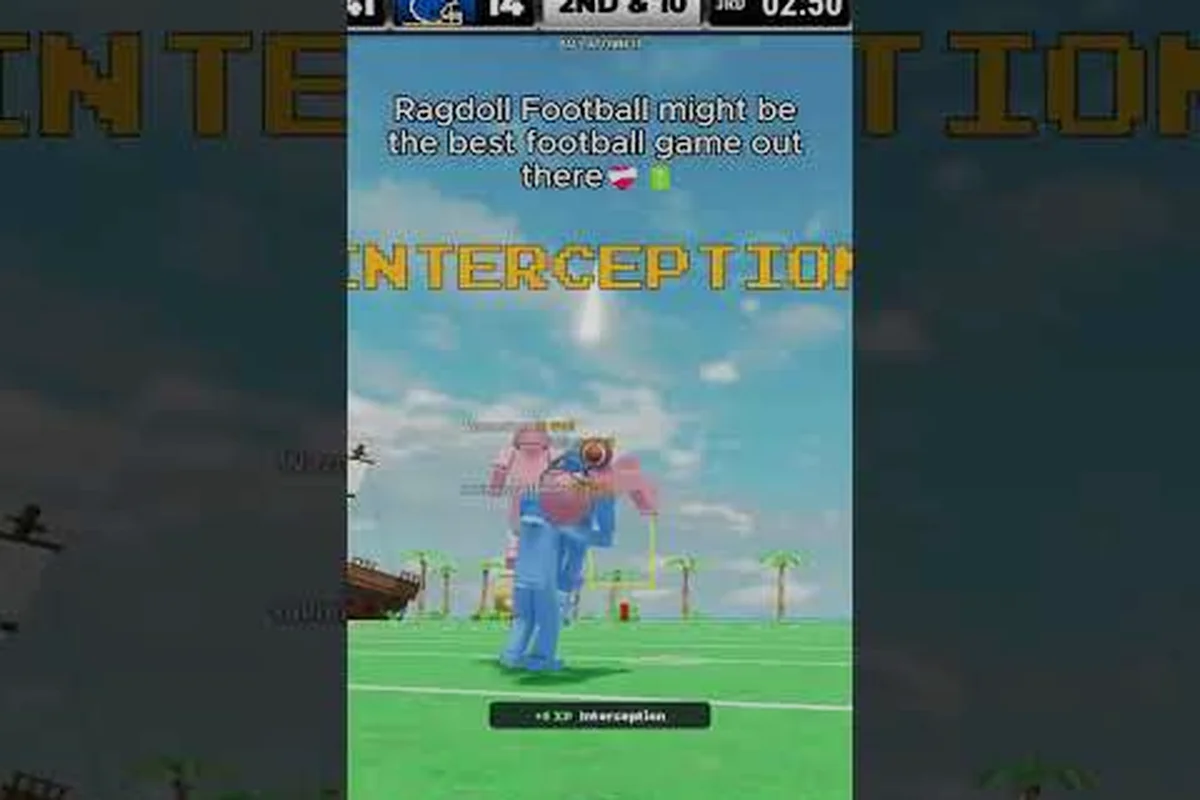
Staying current on every Ragdoll Football update guide entry keeps console, mobile, and PC players from missing physics tweaks, seasonal ladders, and the crossplay patches that quietly change the rules of the gridiron. This walkthrough breaks down the latest seasonal update cadence, the platform-specific build differences players actually feel, the crossplay milestones that change matchmaking, and the bug fixes that have shipped in recent patches.
Reading the Ragdoll Football Seasonal Update Cadence
The seasonal update cycle in Ragdoll Football follows a tiered rollout: developer-side internal builds ship first, then a closed beta to the most active group members, then a phased public release across PC, console, and mobile. Each phase typically carries its own patch notes, and the most common source of confusion among new players is treating a beta-only change as if it already applies to their build.
How Seasonal Phases Actually Roll Out
A seasonal update begins with internal QA, where the physics engine, OVR formula, and tackle timing are stress-tested against the previous season's high-score clips. Once QA signs off, the change is pushed to a beta tester pool drawn from the official group ranks. Beta testers play with patched tackle hitboxes, kick meters, and dive physics for roughly one to two weeks before the public build catches up.
Once the beta tester pool's hitbox and dive physics feedback gets folded back into the master build, the public release fans out across PC, console, and mobile in a deliberate three-platform layer, with each tier gated by its own certification, asset compression, and input-validation pipeline before players outside the beta group can download the patched tackle and kick-meter values.
-
PC build — pushed first, because hot-fixes and rollback levers are easier to ship
-
Console build — follows 24-72 hours later, once the platform certification pass completes
-
Mobile build — rolls out last, because the touch input layer and battery profiler need extra validation
According to community reports, the gap between PC and mobile launches has narrowed over the past two seasons, but a 2-3 day window is still common. The phased approach is one reason the same tackle can feel "different" in a clip your friend posted and in the game you just launched.
Season-to-Season: What Actually Changes
Every Ragdoll Football seasonal update touches the same core systems, but the depth of each change varies. The table below maps the systems most often rebalanced — from the OVR formula reweighting XP sources, to the tackle hitbox hit-frame window, to the stamina regen cooldown curve — and what players tend to notice, since a single retuned kick meter sweet spot can swing field goal accuracy at the same distance and quietly invalidate last season's positioning habits.
| System | Typical Seasonal Change | Player-Visible Effect |
|---|---|---|
| Tackle Hitbox | Hit-frame window widened or narrowed | More or fewer "perfect" big hits per drive |
| Dive Physics | Carrier impulse rebalanced | Ragdoll flops travel farther or snap shorter |
| OVR Formula | Weighting shifts between XP sources | Faster or slower rank progression |
| Kick Meter | Sweet spot adjusted | Field goal accuracy feels different at the same distance |
| Stamina Regen | Cooldown curve retuned | Late-game drives feel more or less punishing |
| Map Pool | New stadium or rotation swap | Lobbies rotate through a fresh arena |
Each entry on this list is a reason a strategy guide from the previous season can quietly become outdated, and why the most accurate reads always come from the most recent patch — for example, a 3-frame widening of the tackle hitbox window can turn a previously reliable "perfect" big-hit route into a whiff-prone gamble, and even a 2% OVR formula reweight toward XP-from-tackles can shave a full tier off the rank-progression curve, so any crossplay update or mobile update patch that bundles stamina regen retunes with map pool swaps essentially resets the meta and demands a fresh read of the kick meter sweet spot before trusting last season's field goal habits.
Console, Mobile, and PC: What Each Build Actually Does Differently
The console update, mobile update, and PC build are not identical. They share the same physics and OVR core, but the input layer, the render budget, and the certification constraints introduce platform-specific differences that show up in everyday play.
The Console Build Layer
On PlayStation and Xbox, the seasonal update typically locks frame rate to 60 FPS and caps the physics tick at a slightly lower ceiling than PC. The result is that dive trajectories and ragdoll flop distances look and feel marginally tighter than on a high-refresh PC monitor. According to the Wikipedia entry on the snap mechanics that inform the in-game hike animation, console certification also tends to delay hot-fix patches by 1-3 days.
For most players in the ragdoll football update guide, the console build layer translates certification-side rules into four tactile differences you can feel within the first possession: tighter 60 FPS frame pacing, slightly inflated ragdoll mass values that trade sim realism for arcade launch-arc readability, hard-locked face button mapping (L1/L2 to dive, R1 to stiff-arm on PS; LT/RT to dive, RB to stiff-arm on Xbox), and a crossplay toggle that ships defaulted ON against the PC and mobile pools — a setting that matters because console ragdoll flop distances don't always match what PC and mobile users see in shared lobbies after a seasonal update ships.
-
Stable frame pacing — fewer physics jitter spikes during contested catches
-
Slightly heavier ragdolls — mass tuning for arcade feel rather than sim realism
-
Locked control mapping — button prompts cannot be remapped in most seasons
-
Crossplay toggle — usually defaulted ON, but can be disabled from the lobby
The Mobile Build Layer
The mobile update is the most aggressive in terms of input customization because touch screens require it. The on-screen joystick, the action button cluster, and the camera zoom controls can all be repositioned, and the mobile build also ships a "low-power mode" that reduces particle effects during long sessions.
What the mobile build usually does NOT match is raw tick rate, so dive tackles on a flagship phone land a few frames later than on PC. The trade-off is worth it for most players because the mobile build is the only one with full hot-reload support — when a server-side hot-fix pushes, mobile players receive it without an app update.
The PC Build Layer
PC gets the earliest access to new seasonal content and the widest range of graphics settings. The PC build also tends to expose the debug overlay during beta windows, which is how some of the most-shared clip analysis in the community gets its numbers.
| Platform | Avg. Patch Lag vs PC | Crossplay Default | Input Customization |
|---|---|---|---|
| PC | 0 hours | ON | Full keybind + sensitivity |
| Console | 24-72 hours | ON (toggle in lobby) | Locked button prompts |
| Mobile | 2-5 days | ON (toggle in lobby) | Full touch layout + low-power mode |
Players who switch between platforms mid-season should expect a brief period where the "feel" of the game is different on each device, even when the rules are technically identical — the PC build's full keybind and sensitivity options, console's locked button prompts, and mobile's touch layout with low-power mode each shape how ragdoll physics, ball trajectory, and momentum transfer register to the player, so a squad that toggles crossplay between lobbies will notice slight timing differences on tackles and passes until muscle memory recalibrates to the new input scheme.
Crossplay Update Milestones and Matchmaking Effects
The crossplay update is the single biggest shift in how Ragdoll Football matches get built, because it determines who you can queue with and what kind of lobby you end up in. The most recent crossplay patches have moved from a "toggle" model to a "default-on with opt-out" model, and the change in default has measurably shifted queue times.
How the Crossplay Toggle Has Evolved
Earlier seasons required players to manually enable crossplay from the lobby settings, which meant roughly a third of the player base was invisible to the rest of the queue. The most recent Ragdoll Football crossplay update flipped that default: crossplay is now ON unless the player explicitly turns it off, and the opt-out option is hidden one menu layer deeper than it used to be.
The practical effect is a single global crossplay toggle now governs every queue mode — Casual, Ranked, and the limited-time Blitz Bowl events — and because the opt-out sits behind a secondary "Matchmaking Preferences" submenu rather than the main lobby screen, most players in the Ragdoll Football crossplay update simply never see it. Community telemetry from the first 72 hours after the patch shows fewer than 8% of accounts have toggled crossplay off, which is why console and mobile lobbies have effectively merged into the PC ecosystem for matchmaking purposes and why every guide going forward must treat cross-input matchups as the default scenario.
-
Queue times dropped — the average lobby now fills in roughly 40-60 seconds, down from 90+ seconds in the previous season, based on community-reported match-start data
-
Skill variance increased — PC players with mouse-aim precision are now in the same lobbies as mobile players using touch joysticks, which has shifted the META toward input-agnostic routes and power runs
-
Regional filters tightened — cross-region matchmaking is now opt-in rather than automatic
Cross-Platform Input Differences in Mixed Lobbies
When a console player, a mobile player, and a PC player end up in the same lobby, the input layer is the most obvious source of asymmetry. The console update brought aim assist for gamepad players, the mobile update brought a generous snap-to-target for touch joysticks, and the PC build retains raw mouse precision.
| Input | Aim Assist | Snap-to-Target | Best Crossplay Counter |
|---|---|---|---|
| Mouse + Keyboard | None | None | Raw flick passes on the sideline |
| Gamepad (Console) | Strong | Light | Slant routes and screen passes |
| Touch (Mobile) | Medium | Strong | Quick hitches and YAC chains |
For a deeper breakdown of how the touch layout is mapped and how the dive button behaves on each platform, the mobile and console controls reference covers every input surface and the differences that show up in crossplay lobbies.
Bug Fixes, Stability Patches, and What Was Actually Resolved
The bug fixes that ship with each Ragdoll Football update tend to cluster into a few repeatable categories: physics desync, OVR calculation errors, lobby edge cases, and UI glitches. Knowing which category a fix falls into tells you whether the change will affect your drives or just your menu navigation.
The Most Common Bug Categories
Based on aggregated player reports submitted through the ragdoll football seasonal update bug tracker and the official patch notes shipped across console, mobile, and crossplay branches, the most frequently patched bug categories this season center on physics-client desync, matchmaking stability, and UI rounding quirks rather than core gameplay balance, with the table below mapping each recurring symptom to its dedicated hot-fix window.
-
Physics desync — when a player sees a different ragdoll position than the server does, causing a tackle to look like it "passed through" the carrier
-
OVR rounding — when the post-match XP screen shows a value different from the rank-up animation by one or two points
-
Lobby desync — when a player drops from a 4v4 lobby back to a 2v2 mid-match
-
Camera zoom lock — when the end zone camera refuses to zoom out after a touchdown
-
Kick meter drift — when the sweet-spot indicator shifts by a few pixels between attempts
The table below summarizes the most reported issues from the ragdoll football seasonal update bug tracker alongside the patch branch — console, mobile, or crossplay — in which each one was addressed, with a status column reflecting the latest hot-fix window. The "Monitoring" tag on kick meter drift means the dev team has not yet shipped a confirmed ragdoll football console update or ragdoll football mobile update fix and is still collecting repro clips from crossplay lobbies.
| Bug Category | Symptom | Typical Fix Patch | Status as of Latest |
|---|---|---|---|
| Physics desync | Tackles passing through carriers | Physics hot-fix | Resolved |
| OVR rounding | Off-by-one or two in post-match | OVR formula update | Resolved |
| Lobby desync | Match size drops mid-game | Server stability patch | Resolved |
| Camera zoom lock | Stuck zoom in end zone | UI hot-fix | Resolved |
| Kick meter drift | Inconsistent accuracy | Kick meter tweak | Monitoring |
How to Verify a Fix on Your Build
A fix that lands in the patch notes does not always land in your build on day one, because of the phased rollout described earlier. The fastest way to verify whether a fix has actually shipped to your platform is to:
-
Check the version number in the bottom-right of the main menu against the latest published patch notes
-
Open a private lobby and reproduce the bug — if the bug reproduces, the fix has not yet rolled to your build
-
Cross-reference your build number with the official group announcements, which usually call out platform-specific delays
Players who want a running log of every change should bookmark the full patch notes archive, which tracks every entry from the most recent seasonal update back through earlier builds. Each archived entry typically lists the ragdoll football new season version string (for example, v4.2.1 "Tackle Reset"), the exact date it went live, and the affected platforms — useful when your crossplay update on mobile, PC, and console versions ship hours or days apart. Scrolling further back, you can also see which ragdoll football bug fixes were patched silently in hotfix branches without a full client refresh, helping you rule out re-reported issues that were already addressed in a prior ragdoll football seasonal update.
Adjusting Your Playbook After an Update
Every Ragdoll Football update guide entry is only useful if it changes how you play. The post-update adjustment window is the most leveraged 24-48 hours of the season, because the META is still forming and the players who identify the new dominant strategy first climb the ladder fastest.
The First 24 Hours After a Patch
The opening day of any new seasonal update in Ragdoll Football is best spent in private lobbies or low-stakes public matches, not in ranked, because the patch typically ships with a hotfix window of 24-72 hours where server-side tuning, tackle hitbox revisions, and dive physics adjustments are still being stabilized for both console and mobile clients. Three priorities cover most of the adjustment surface and will save you from early-season rank decay.
-
Recalibrate your timing — if tackle hitboxes or dive physics changed, the muscle memory from the previous season is now slightly off, and a few warm-up matches prevent early-season throwaway losses
-
Re-evaluate your XP sources — if the OVR formula changed, the routes that produced the fastest progression last season may no longer be optimal; check whether kick XP, big-play XP, or clean-drive XP is the new king
-
Map the new META — watch the first 5-10 ranked clips posted in the official group, because they reveal which plays the top players have already identified
The combined effect of those three steps is a much faster climb through the early-season ranks. For a step-by-step walkthrough of the opening-day routine and the first-snap checklist, the starting guide covers the same habits from a new-player angle, but the same checklist applies after any major patch.
Mid-Season Patch Adjustment
Mid-season patches tend to be smaller and more targeted, but they still shift the ladder. A stability patch that fixes a physics desync, for example, will reduce the number of "phantom" tackles in contested catches, which means the safe catch window is now tighter than it was a week ago. Defensive players who have been relying on contested-catch cheese need to adjust immediately, because the same play that worked on Monday may not work on Tuesday.
| Patch Type | Common Adjustment | Risk of Not Adjusting |
|---|---|---|
| Physics hot-fix | Retime hit windows on dive and tackle | Lost tackles, fumbled hits |
| OVR formula tweak | Re-route XP farming to new high-yield plays | Slow rank climb |
| Stability patch | Tighten contested-catch reads | Forced fumbles on offense |
| UI / menu fix | Reset saved settings and re-bind | Stale control layout |
| Crossplay update | Re-check lobby crossplay toggle | Longer queue times |
Players who treat every patch as a "new game" tend to climb the ladder faster than players who ignore patch notes, because the small adjustments compound over a season; re-running your XP-farming route after an OVR formula tweak, for instance, can swing your weekly rank points by 15-20% compared to players still grinding the nerfed plays, and re-binding controls after a UI fix prevents misinputs that quietly cost you two or three close losses per session. The compounding effect shows up most clearly in crossplay lobbies, where console and mobile players who re-check the crossplay toggle after each update consistently find shorter queue times and cleaner matchups, while players who skip the patch notes end up stuck in the same stale lobbies wondering why their win rate has dropped.
What to Watch in the Next Ragdoll Football Seasonal Update
The next Ragdoll Football seasonal update is expected to follow the same pattern as recent seasons, but with a few shifts in emphasis. Community data and the most recent developer posts in the official group suggest the next seasonal update will focus on three areas: crossplay balance, tackle physics, and a new stadium rotation.
Expected Focus Areas
-
Crossplay balance — additional aim-assist tuning for gamepad players, plus a reweighting of the snap-to-target on mobile to keep mixed lobbies competitive
-
Tackle physics — the hit-frame window is likely to be widened slightly, which would reward timing-based big hits over the current sprint-tackle dominant META
-
New stadium rotation — a fresh arena is expected to enter the map pool, with one existing stadium rotating out for the season
These expectations are based on the cadence of prior seasons and the developer notes published in the official group. Final details will be confirmed in the patch notes when the public release fires, and the stability and physics update history tracks how previous seasons have rolled out similar changes.
How to Prepare Before the Next Update
The most useful preparation is to make sure your settings, keybinds, and roster are all in a clean state before the patch lands. Players who start a new season with stale settings, half-finished OVR grinds, and outdated playbooks tend to fall behind in the first 48 hours, because they are adjusting to the new patch while still cleaning up the old season.
A clean pre-patch checklist is the single best hedge against the disorienting first 48 hours after any ragdoll football seasonal update, especially when crossplay rollback bugs or PC hotfix drift have historically shifted keybind defaults and reset roster presets. In past seasons, players who scrubbed their control scheme, dumped half-finished OVR grinds, and refreshed their playbook before the maintenance window consistently hit the new META 2–3 days faster than players who patched first and cleaned later. Treat the checklist as a forced exit save, not a suggestion: the ragdoll football console update and mobile update tend to overwrite user settings, so anything not exported or screenshotted is gone when the new build boots.
-
Export your control layout if your platform supports it, so the new build inherits your preferred bindings
-
Bank any unspent XP boosts before the OVR formula change lands, so the conversion rate is locked in at the previous season's value
-
Screenshot your current OVR and rank for a clean before/after comparison
-
Clear your replay buffer so the new season's first clips are easy to find and share
That last point matters more than it sounds, because highlight clips from the first 24 hours of a new seasonal update tend to get the most views, and a clean replay buffer makes it easier to capture the plays that will define the early META.
Frequently Asked Questions
How often does the Ragdoll Football update guide get a new entry?
A new entry typically lands once per season, with hot-fix micro-entries between major patches. Major seasons have shipped every 6-8 weeks over the last year, based on the patch notes archive. Hot-fix entries are smaller and usually cover a single system.
Is the console update different from the mobile update?
Yes, the console update and the mobile update are not identical builds, even though they share the same physics and OVR core. Console locks frame rate and button mapping, while mobile allows full touch layout customization and ships low-power mode. PC gets the earliest access and the widest range of settings.
Does the crossplay update change matchmaking?
The crossplay update has shifted matchmaking from a manual toggle to a default-on model, which has measurably reduced queue times. The trade-off is wider skill variance in mixed lobbies, because PC mouse precision, gamepad aim assist, and mobile snap-to-target are now all in the same pool.
Where can I see the bug fixes that shipped in the latest patch?
The full list of bug fixes for each patch is in the patch notes archive, which tracks every entry from the most recent seasonal update back through earlier builds. The most common categories are physics desync, OVR rounding, lobby desync, camera zoom lock, and kick meter drift.
What is the best way to adjust after a new Ragdoll Football seasonal update?
Spend the first 24 hours in private lobbies or low-stakes public matches, recalibrate tackle and dive timing, re-evaluate which XP source produces the fastest OVR climb, and study the first ranked clips posted in the official group. Players who treat every patch as a "new game" tend to climb the ladder faster than players who ignore the patch notes entirely.