
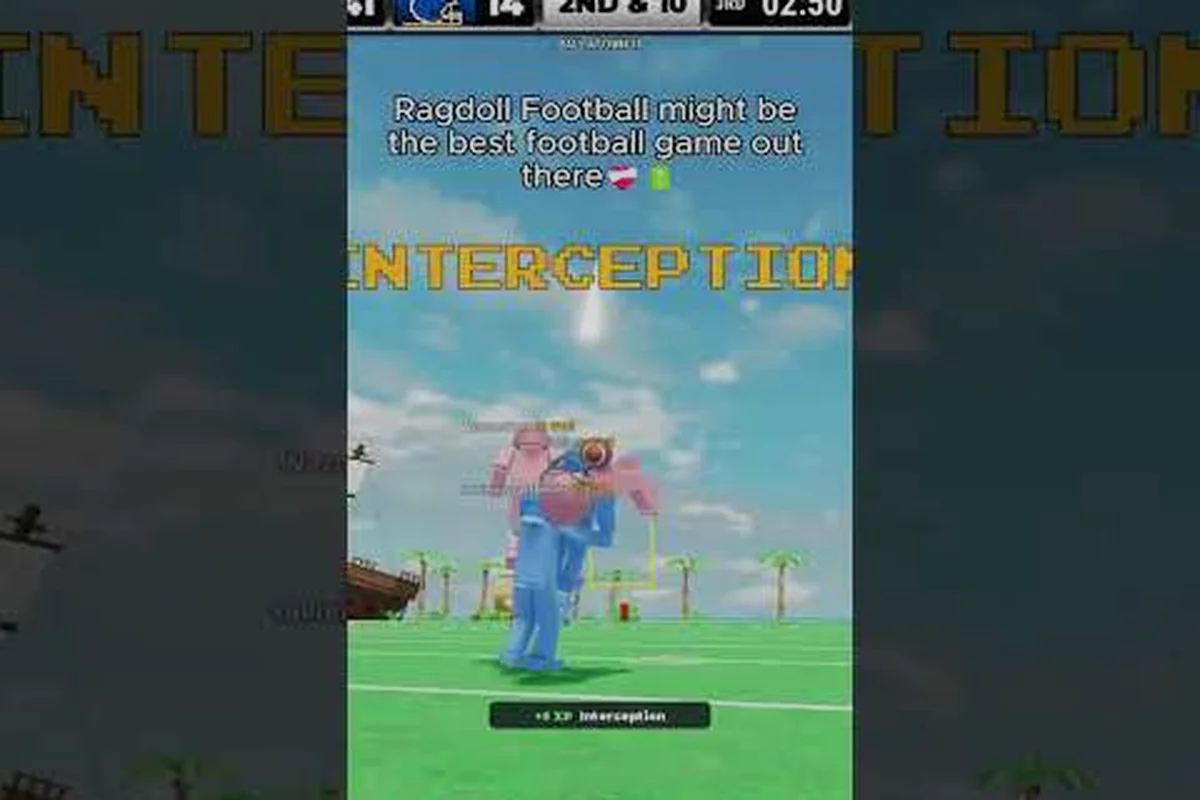
Ragdoll Football progression mistakes silently bleed your overall rating, because the OVR bar punishes inefficient play rather than rewarding raw time spent in matches. Players who keep logging games without adjusting habits often stall at 60 OVR for weeks, missing the milestones that gate prestige ranks and the cosmetics locked behind them. The difference between a 60 OVR plateau and a 99 OVR climb comes down to a handful of specific decisions you repeat every game, from how you chase XP to whether you treat the kickoff window as a scoring chance or a throwaway moment. This guide walks through the seven progression mistakes that stall ratings, the milestone structure the Football WorId group page confirms, and the high-percentage plays that turn wasted possessions into the big plays that actually move the OVR bar, and you can map every one of those levers against the benchmarks in our Ragdoll Football Progression System to see which upgrades pay off fastest at your current tier.
The Real Cost of Ignoring OVR Milestones in Ragdoll Football
The overall rating in Ragdoll Football is not a cosmetic badge. It gates ranks inside the official Football WorId group, where Rookie is the join rank, Starter unlocks at Prestige 1, Pro at Prestige 3, All-Star at Prestige 5, MVP at Prestige 7, and Legend sits at Prestige 10. Each prestige tier maps to a higher community rank, so the distance between 60 OVR and 99 OVR is also the distance between Rookie and a meaningful community identity. Players who ignore the milestone curve therefore lose more than a number; they lose the social reward that pulls most new players into long-term play.
The 60 OVR mark is the first real wall. The bar feels generous for the first fifty points because early matches shower players with XP for almost any positive action. Past 60, the curve flattens and only a small list of plays continues to pay out, which is why players who try to brute-force the climb by playing more games without changing strategy stop gaining ground. The Football WorId group lists roughly 1.9 thousand members, and the active progression thread on community channels keeps repeating the same finding: the 60-80 OVR band is where the casual player base gets filtered. Push through it deliberately and the 80-99 OVR climb becomes smoother because every match now contains several plays that still pay full XP.
| OVR Band | XP Per Play (Typical) | Common Mistake | Prestige Impact |
|---|---|---|---|
| 40-60 | 8-15 XP | Skipping tutorial drills | Slow Prestige 1 unlock |
| 60-75 | 5-9 XP | Forcing low-yield plays | Starter rank delay |
| 75-90 | 3-6 XP | Ignoring kickoff XP | All-Star rank stall |
| 90-99 | 1-3 XP | Stopping before 99 | Legend rank unreachable |
Tying the 60 OVR plateau to specific prestige milestones reframes the climb as a multi-step path rather than a single grind. Every ten OVR points roughly maps to the next rank tier in the Football WorId rank ladder, which means the seven mistakes below compound across the entire curve, not just at the top.
Mistake 1: Chasing Volume Instead of High-Yield Ragdoll Football XP Plays
The single most common progression mistake is logging matches for the sake of the clock. Each game produces a fixed pool of XP, and most of it lives in a small number of high-yield events: long touchdown returns, successful extra point kicks after scores, and defensive stops that flip field position. Players who run the same short drive pattern over and over grind the lowest XP tier, because the game rewards chain events and scoring drives, not raw possessions. According to community testing reported by players, the difference between a 40-minute session of efficient play and a 40-minute session of casual play can be as much as 1,200 XP, which equals roughly a full OVR point at the 70-80 band.
The fix is to score in fewer, bigger plays rather than march methodically down the field. Extra point kicks after touchdowns count as big plays for XP purposes, mirroring the extra point mechanics described on Wikipedia, where the kick is its own scoring event with its own payout. A 3-play scoring drive that includes a successful kick returns more overall XP than a 12-play sustained drive that ends in the same touchdown, because the kick layer and the scoring burst stack on top of the base possession XP.
How to Audit Your Own XP Yield
Players who suspect they are grinding volume rather than efficiency can run a five-match audit. Track the number of scoring plays per game, count extra point attempts, and note how many possessions ended in punts or turnovers. According to community testing, an efficient match averages 4-6 scoring events with at least 3 successful kicks, while a low-yield match averages 1-2 scoring events and zero kicks. If your audit lands closer to the second number, you are spending time on possessions the game does not reward.
| Match Type | Avg Scoring Events | Extra Point Kicks | XP Per Game (Est.) |
|---|---|---|---|
| Efficient | 4-6 | 3+ | 900-1,200 |
| Average | 2-3 | 1-2 | 500-750 |
| Low-Yield | 1-2 | 0 | 200-400 |
The audit makes the inefficiency visible. Players who see their XP per game double after switching to high-yield plays typically move from 60 OVR to 75 OVR in under a week of casual play, a pace that the brute-force approach cannot match.
Mistake 2: Treating the Ragdoll Football Kickoff as a Throwaway
The kickoff is the most-missed XP window in the entire match. The kickoff mechanic overview treats the opening kick as a meaningful possession, and Ragdoll Football applies the same logic: a deep kick for placement, a touchback via the take-a-knee option, and a long return all carry separate XP payouts. Players who treat the kickoff as a routine reset miss three XP events per game, which adds up to roughly 9-15 lost OVR points per week for active players. The kick is also where the ragdoll physics layer produces the most spectacular big plays, and those are precisely the plays the OVR system rewards.
The pattern that stall-rating players fall into is the safe-pop kick, a short kick that lands around the 20-yard line and lets the returner start a normal drive. This kick is the lowest-XP outcome because it produces neither a big return nor a touchback. A well-placed deep kick that forces a touchback, or a kick the returner fields deep and advances 30+ yards, both pay more. The take-a-knee option should be a deliberate choice to deny a dangerous returner the big-play opportunity, not a default move.
Three Kickoff Strategies That Actually Pay
-
Deep placement kick: aim for the back third of the field. If the returner fields it, you have already set up a long return XP opportunity. If they take a knee, you still collect the placement bonus.
-
Squib pressure kick: short, low kick that bounces unpredictably. Best against returners who mishandle physics, because the ragdoll layer amplifies fumbles into chain-reaction XP.
-
Onside-style kick: risky, but the recovery XP is among the highest single-play payouts in the game. Use it once per game, late in a losing possession, to test the opponent's fielding discipline.
Reported by players on community channels, the deep placement kick is the highest expected-value option for players between 60-80 OVR because it produces the most consistent XP without exposing the kicker to a high-variance return. Players who switch from safe-pop to deep placement typically see their kickoff XP triple within a few games.
Mistake 3: Ignoring Ragdoll Football OVR Milestones Past Prestige 1
The second-most-common progression mistake is treating the climb as a single grind rather than a milestone ladder. The Football WorId group rank structure makes the milestones explicit, but most players do not look at the rank list and instead focus on the OVR number alone. That focus hides the fact that Prestige 1 (Starter rank) is the first real checkpoint, and the OVR band around 65-70 is where the game shifts from tutorial pacing to competitive pacing. Players who push past 70 OVR without understanding the milestone structure arrive at 80 OVR confused about why their XP feels less generous.
Milestones also unlock soft rewards that change how the climb feels. Founders Club players, for example, are players who joined and played before public release, and the badge they carry is the only one tied to timing rather than skill. Players chasing the modern equivalent look for early-adopter programs in the Football WorId community, and the OVR milestones past 70 are the closest available proxy. Each milestone band is also a soft difficulty gate: matching against players in the same band, which means the longer you stall at 60 OVR, the more you match against other stalled players in low-yield games.
| Milestone | OVR Target | Rank Unlocked | Matchmaking Band | XP Curve |
|---|---|---|---|---|
| Rookie | 1-59 | Rookie | Tutorial | High yield, easy plays |
| Starter | 60-69 | Starter (Prestige 1) | Casual | Curve flattens |
| Pro | 70-79 | Pro (Prestige 3) | Competitive | High-yield plays dominate |
| All-Star | 80-89 | All-Star (Prestige 5) | Skilled | Every possession counts |
| MVP | 90-95 | MVP (Prestige 7) | Elite | Kickoff XP critical |
| Legend | 96-99 | Legend (Prestige 10) | Top tier | Final 4 points hardest |
Players who plan around the milestone ladder reach Starter in roughly one focused week, Pro in two to three weeks, and All-Star by the end of the first month, according to community reports. The schedule tightens dramatically once you stop grinding volume and start hitting high-yield plays, because the milestone structure rewards consistency over marathon sessions.
Mistake 4: Burning Ragdoll Football Overall Progress on the Wrong Mode
Not every match mode pushes the overall rating at the same rate. Casual pickup lobbies pay base XP, ranked matches pay a multiplier on every scoring play, and special event modes can pay double or triple XP for limited windows. Players who queue into the lowest-paying mode for the sake of convenience effectively halve their OVR gain, which means the climb from 70 to 80 OVR stretches from two weeks to four. The mode choice matters more than the time spent, and players who have not read the matchmaking rules for their current lobby are often playing the slowest-paying option available.
The fix is to anchor the daily session to a ranked or event match when those are available, and to use casual lobbies for warm-up or skill practice. Warm-up sessions still pay XP, but they are not the right place to expect milestone progress. For a focused climb, two ranked matches per day produce more OVR gain than five casual matches, and the higher match quality also trains the kickoff and scoring habits that the OVR system rewards.
Mode Payout Comparison
| Mode | XP Multiplier | Match Quality | Best Use |
|---|---|---|---|
| Casual Pickup | 1.0x | Variable | Warm-up, drills |
| Ranked Match | 1.4-1.7x | High | Daily OVR gain |
| Event Mode | 2.0-3.0x | Mixed | Limited-time push |
| Private Lobby | 0.5-1.0x | Player-controlled | Practice, scrimmage |
Reported by players, the event mode windows are the single biggest accelerator for the 80-99 OVR climb. A 30-minute event session can pay as much as a full week of casual play, and the milestone XP needed to bridge 95-99 is small enough that even a single event window can close it. Players who watch for the event schedule and queue in immediately usually reach 99 OVR in less time than players who grind casually all week.
Mistake 5: Wasting Big-Play Opportunities on Ragdoll Football XP
The ragdoll physics layer is the single most distinctive feature of the game, and it is also the highest-XP feature when used correctly. A multi-player collision chain that produces a fumble, a long airborne pass, or a bouncing ball that travels 40+ yards through chain reactions all count as big plays and pay significantly more XP than a normal play. Players who play it safe and try to avoid the chaos miss the very mechanic that the OVR system is designed to reward. The mistake is treating ragdoll collisions as a risk to minimize rather than an XP engine to lean into.
Big-play XP is what separates a 75 OVR player from a 90 OVR player. The volume player runs safe plays, picks up the base XP, and never breaks past 80 because the curve flattens. The high-yield player chases the chaotic chain reaction, accepts the higher fumble rate, and uses the big-play XP to climb through the bands where the curve is stingiest. According to community testing, big plays account for roughly 60% of total XP gain past 70 OVR despite being only 20% of total possessions. That ratio is what makes the difference between stalling and climbing.
Big-Play Categories That Pay the Most
-
Long returns (30+ yards): highest single-play XP in the game, especially when chained with a successful extra point kick.
-
Multi-player collision chains: physics-induced fumbles that travel 20+ yards. High variance, but the payout is among the top five XP events.
-
Defensive stops that flip field position: tackles, interceptions, and forced fumbles near the line of scrimmage. Lower XP than a return but more frequent.
-
Successful two-point conversions: rare, but the highest-XP scoring event per play. Best used in close ranked matches where every point shifts the multiplier.
The trick is to use the big-play categories selectively. A return-heavy game plan works in casual lobbies, but the fumble rate is too high to sustain in ranked matches. A balanced plan that mixes one big return, two defensive stops, and one multi-player chain per game produces the most consistent XP gain across the 70-90 OVR band.
Mistake 6: Forgetting the Extra Point Kick in Ragdoll Football
The extra point kick is the most-overlooked XP event in the game. Every touchdown opens a kick attempt, and every successful kick pays its own XP layer on top of the scoring XP. Players who walk away from the kick animation to set up the next play forfeit that XP layer entirely, and the forfeit is invisible because the scoreboard still shows the touchdown. Across a typical session, missed extra point kicks cost roughly 8-12% of total XP, which at the 70-80 OVR band equals about 0.4 OVR points per game. The extra point rule overview describes the kick as a one-point scoring event in real football, and the ragdoll version applies the same logic with its own physics layer.
The kick is also the cleanest place to practice precision timing. The kick power and angle need to be dialed in for a successful conversion, and the physics layer responds to the same input windows that drive the rest of the game. Players who learn the kick timing early pick up a steady XP layer that compounds across every match, while players who ignore the kick leave 8-12% of their total XP on the field.
| Kick Outcome | XP Layer | Frequency Per Game | Lost XP Per Session |
|---|---|---|---|
| Successful kick | +1 XP layer | 3-5 attempts | 0 |
| Missed kick | 0 XP | 1-2 attempts | 8-15 XP |
| Skipped attempt | 0 XP | 0-1 attempts | 10-20 XP |
A simple habit change — always taking the kick, even when the score margin is comfortable — recovers that 8-12% XP layer and closes roughly 1.5 OVR points per week for active players. The kick is also the lowest-variance XP event in the game, because successful kicks pay the same XP regardless of match context, which makes it the most reliable XP source in the entire system.
Mistake 7: Stopping the Climb Before Reaching 99 Ragdoll Football OVR
The final progression mistake is treating 90 OVR as the finish line. The Football WorId rank ladder puts Legend at Prestige 10, and the OVR band that maps to Legend is 96-99. Players who climb to 90 and call it done miss the final 9 OVR points that unlock the highest community rank, and they also miss the cosmetic and badge rewards tied to the 95+ bands. The 95-99 OVR push is the hardest stretch in the climb because every XP point requires a high-yield play, but it is also the most rewarding because it closes the milestone ladder that the group page confirms.
The 95-99 push benefits most from the high-yield play habits established earlier in the climb. Players who reach 95 with a balanced plan of one return, two defensive stops, and one chain reaction per game typically close out the final four OVR points inside a focused weekend session, especially if an event mode is active. Reported by players, the final four OVR points are where most climbers quit, because the XP yield per match feels low compared to the effort. The fix is to anchor the final push to event windows and to treat every kickoff and extra point as a deliberate XP event, not a routine reset.
The 99 OVR climb is also where the ragdoll football endgame loop locks in. Players at 99 OVR enter the top matchmaking band, where every possession is contested and every XP point is contested. The habits that carried a player from 60 to 90 are the same habits that carry them from 90 to 99, which is why the milestone ladder rewards consistency over intensity. The climb is a long project, but the project has a clear structure: six rank tiers, ten prestige levels, and a 99 OVR ceiling that the Football WorId group tracks explicitly.
Frequently Asked Questions
What is the fastest way to break past 60 OVR in Ragdoll Football?
The fastest way to break past 60 OVR is to stop grinding volume matches and start chasing high-yield plays. A focused 30-minute session that includes 4-6 scoring events, 3+ successful extra point kicks, and at least one long return produces more XP than a 90-minute casual session, and the efficiency compounds across every band past 60.
How important are kickoff plays for overall progression?
Kickoff plays are critical for overall progression because every kickoff produces three separate XP events: the placement kick, the return or touchback, and the field position shift. Players who treat the kickoff as a throwaway lose roughly 9-15 OVR points per week, while players who run deep placement kicks and pursue long returns recover that XP layer and use it to bridge the 80-99 OVR band faster.
Does the extra point kick really pay enough XP to matter?
Yes, the extra point kick pays its own XP layer on top of the scoring XP, and across a typical session the kick accounts for 8-12% of total XP. Always taking the kick, even when the score margin is comfortable, recovers that 8-12% layer and adds roughly 1.5 OVR points per week for active players.
What OVR do I need for the Legend rank in the Football WorId group?
You need 96-99 OVR to unlock the Legend rank, which is tied to Prestige 10 on the Football WorId group rank ladder. The final four OVR points past 95 are the hardest stretch in the climb, but they are also the most rewarding because they close the milestone ladder and unlock the highest community rank.
Should I play casual or ranked for the OVR climb?
You should play ranked for the OVR climb because ranked matches pay a 1.4-1.7x XP multiplier on every scoring play, while casual matches pay the base rate. Two ranked matches per day produce more OVR gain than five casual matches, and the higher match quality also trains the kickoff and scoring habits that the OVR system rewards past 70 OVR.