
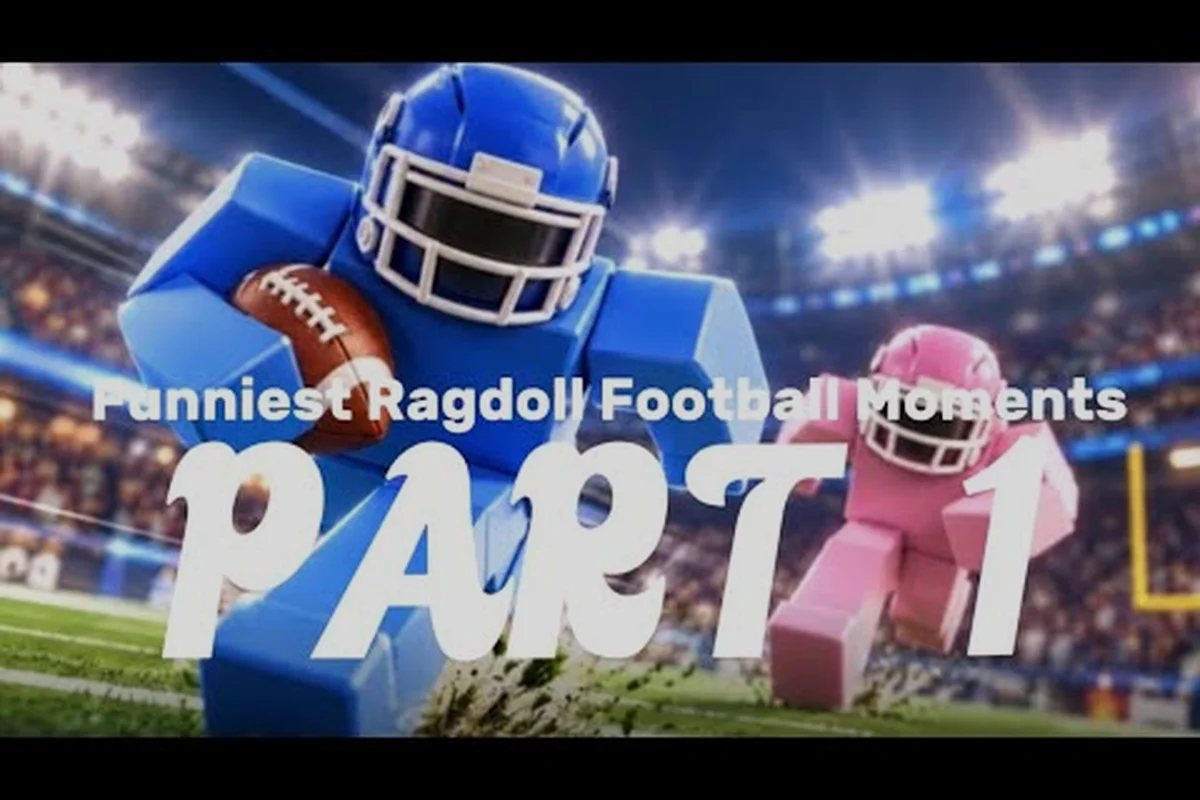
Ragdoll Football is built around physics-driven tackles, ragdoll collisions, and a constant stream of player reports when things go sideways. A clean game only happens because the community actively enforces the rules, and that is exactly what ragdoll football group support is designed to help with. Whether a teammate goes AFK in the pocket, an opponent spam-tackles the quarterback after every snap, or someone exploits a collision bug to score free touchdowns, the reporting pipeline is the only safety net the average squad has.
Why Group Support Matters in Ragdoll Football
This ragdoll football community guide breaks down every official channel where players can ask for help, how to file a useful report, and which behaviors the moderation team treats as priority violations. The goal is simple: keep the game fun for the squad that just queued up after school or work, not for the small group of griefers who ruin matchmaking for everyone else.
Players who take the time to learn the right channels, write clear reports, and support fair play become the backbone of the wider ragdoll football community. Group support is not a single button, it is a routine that experienced players build into their weekly sessions, and the rest of this guide walks through every step.
Official Channels for Ragdoll Football Group Support
The first thing any player needs is a clear map of where to actually ask for help. Ragdoll football group support runs through three official surfaces: the Roblox game page report tools, the developer-managed community group, and the in-game report menu. Each channel handles a different kind of complaint, and picking the wrong one can slow down a response by days.
| Channel | Best Used For | Response Time | Who Handles It |
|---|---|---|---|
| In-game Report button | Mid-match griefing, exploits, slurs | Minutes to hours | Automated filter + live mods |
| Roblox game page report | Account-level abuse, chat harassment | 12–48 hours | Roblox Trust & Safety |
| Developer community group | Bugs, rule clarity, escalations | 1–3 days | Game moderators |
| Wiki community page | Strategy disputes, role questions | Variable | Volunteer editors |
| Social clips (TikTok/YouTube) | Public shaming, evidence sharing | N/A | Community-led |
The in-game report button is the fastest path for anything that happens during a live match. According to community testing, most chat-based offenses are auto-flagged within seconds, while exploits that require a replay review can sit in the queue for several hours during peak windows. The Roblox game page report is the right tool for account-level issues such as off-platform harassment, fake friend requests, or impersonation, because the platform's Trust & Safety team has tools that individual game moderators simply do not have.
For questions about rules, role behavior, or how the physics engine actually scores a tackle, the developer community group and the ragdoll football wiki community pages are the best sources. The wiki is volunteer-run and covers a wide range of mechanical edge cases, including how a kick returner's dive physics work after the half-time reset (a topic that mirrors the kick returner role overview on Wikipedia, which explains why field position after a deep kickoff is often the single biggest momentum swing in any physics football game).
How to Report Players the Right Way
Filing a report that actually leads to a punishment takes more than clicking a button. The ragdoll football report players workflow rewards specific, evidence-backed complaints, and the moderation team has publicly shared what makes a report actionable. A vague "he was toxic" almost never gets reviewed. A report that names the match, the time stamp, and the exact behavior is the difference between a 24-hour queue and a same-day ban.
Gathering Evidence Before You File
Before opening the report menu, pause and collect three pieces of information: the match ID (visible in the post-game scoreboard), the player's exact username (copy it, do not retype it), and a short description of the offense. Screenshots and short clips are useful, but the moderation team has stated they prefer a clear written explanation over raw media, because text reports are easier to triage at scale.
If the offense is a physics exploit, write down the approximate minute in the replay where it happened. For chat offenses, screenshot the chat log before the offender leaves the lobby, since ephemeral chat windows often disappear after the match ends. The best reports include a single sentence of context ("Player X was intentionally tackling our QB after every whistle from minute 3 onward, which we recorded in the match replay") rather than a paragraph of frustration.
Filling Out the Report Form
The in-game report form has five fields: category, severity, description, match ID, and player name. Pick the most specific category available. "Exploiting" is not the same as "griefing," and using the wrong label can route a report to a queue that the moderators check only once a week. Severity should match the actual harm: slurs and exploits are high, AFK farming is medium, mild trash talk is low unless it crosses a personal-attack line.
| Field | What to Write | Common Mistake |
|---|---|---|
| Category | Pick the closest specific tag | Defaulting to "Other" |
| Severity | Match the actual harm | Marking everything high |
| Description | One sentence, no emotion | Multi-paragraph rant |
| Match ID | Exact alphanumeric code | Skipping the field |
| Player name | Copy/paste username | Spelling it wrong |
After submission, the system gives a case number. Save that number. If a follow-up is needed, the case number is the only way the moderation team can pull the original ticket, and it speeds up the resolution by a full day according to player reports shared in the community group. Ragdoll Football highlights on YouTube also show how top creators document griefing clips for public evidence, which is a useful reference for the kind of footage the moderation team responds to fastest.
Enforcing Ragdoll Football Fair Play
Fair play is not a single rule, it is a layered system. The ragdoll football fair play framework covers in-match conduct, post-match lobby behavior, and out-of-game interactions through the community group and social channels. Each layer has its own enforcement tool, and the most effective moderators treat them as a pipeline rather than a checklist. The most effective moderators treat these layers as a pipeline rather than a checklist, routing serious reports upward while handling minor friction on the spot — a workflow mindset that mirrors the structural approach outlined in our Ragdoll Football Starting Guide for getting new players oriented to the game's rules and channels.
In-Match Conduct Rules
In-match rules are the strictest. Slurs, doxxing, intentional team-killing, and physics exploits are immediate grounds for a temporary ban, and repeated offenses escalate to a permanent removal. The defensive side of the ball has its own set of unwritten norms, and players looking to learn the role should read the defensive tackle role overview on Wikipedia to understand how pocket-pressuring behavior is supposed to look in a physics simulation. A defensive tackle who times the snap and drives upfield is playing the role correctly. A defensive tackle who spam-tackles the quarterback after every whistle is griefing, and the distinction is what the moderation team looks for in replays.
Off-ball behavior matters too. Players who AFK in the pocket to farm XP, who quit at halftime to deny the other team a win, or who intentionally run their own players into the end zone to lose on purpose are all flagged by the same anti-griefing filter. The half-time pause between the two halves is a real strategic window, and players who abuse the break to reset their position illegally are reported almost as often as exploiters (a useful parallel: the half-time rules overview on Wikipedia explains how the intermission shapes momentum in gridiron football, and the same principle applies inside the physics engine).
Lobby and Post-Match Behavior
Lobby conduct covers the time between matches. Trash talk is allowed, personal attacks are not. Vote-kicking is a community tool, and players who abuse it to remove strong opponents without cause can find themselves on the wrong end of a report. The post-game scoreboard is also covered: players who edit their username mid-lobby to impersonate others, who spam emojis to crash the chat, or who send friend requests specifically to harass are all reportable.
The ragdoll football community guide published by veteran players recommends a simple rule of thumb: if you would not say it on a school sports field, do not type it in the lobby. That single line of guidance has been cited in the wiki community's fair play page as the cleanest summary of the lobby standard, and it is the exact phrasing that moderators use when they warn a first-time offender.
Out-of-Game Conduct
The out-of-game layer is the one most players overlook. The community group has its own rules, and players who harass others in DMs, who post edited clips to shame a teammate, or who use external apps to cheat the matchmaker are all subject to bans that extend beyond the game itself. Roblox's platform-level rules also apply, so reporting an out-of-game offense through the game page report tool often routes the case to the platform's Trust & Safety team, which has broader tools.
| Behavior Layer | Reporting Tool | Typical Penalty |
|---|---|---|
| In-match griefing | In-game report | 1–7 day ban |
| Exploits / physics bugs | In-game report + dev group | 7–30 day ban |
| Lobby harassment | In-game report | 1–3 day ban |
| Out-of-game harassment | Roblox Trust & Safety | Platform-level action |
| Repeated offenses | Escalation to dev team | Permanent removal |
Building a Healthier Ragdoll Football Community
The ragdoll football community is only as strong as the players who actively maintain it. Reporting bad behavior is half the job. The other half is rewarding good behavior, sharing clear guides, and onboarding new players into the same set of norms that keep the game fun. Community veterans have built a small but consistent playbook for this, and the most common tactics are worth knowing.
Rewarding Good Sportsmanship
The fastest way to grow a healthy community is to publicly call out good behavior. After a close match, a quick "GG" in the lobby, a clip of a clean tackle, or a positive review on the ragdoll football wiki community page all reinforce the norms that the moderation team is trying to enforce. New players learn by watching veterans, and the loudest voices in any lobby set the tone for everyone else.
Creators who run highlight channels on YouTube and TikTok play a special role here, because their reach is much larger than any single lobby. A short clip that celebrates a clean defensive stop, a well-timed kick return, or a respectful post-match handshake teaches more about ragdoll football fair play than any rulebook page. Channels like the Ragdoll Football beginner walkthrough on YouTube also model the right way to teach newcomers, which is the single biggest leverage point in reducing future reports.
Onboarding New Players
Every new player is a future moderator in training, and how they are treated in their first ten matches shapes their behavior for the next thousand. The ragdoll football community guide recommends that veterans spend at least one session per week queuing with rookies, answering basic questions about controls, and walking them through the report menu before they need it. New players who are shown the right channel for help almost never become the kind of repeat offender that drains moderator time.
| Onboarding Action | Time Cost | Long-Term Impact |
|---|---|---|
| Show the report menu | 2 minutes | Reduces future report backlog |
| Walk through controls | 5 minutes | Fewer accidental griefing reports |
| Share the wiki page | 1 minute | Builds self-sufficient players |
| Queue together once | 15 minutes | Creates a return relationship |
Escalating When a Report Is Ignored
Sometimes a report sits in the queue longer than expected, or the response does not match the offense. The escalation path is straightforward. Open a ticket in the developer community group with the case number, describe the outcome, and attach any new evidence. The moderation team has stated that escalated tickets are reviewed by a senior mod within 48 hours, and a clear escalation almost always results in a faster resolution than a fresh report.
Players who feel they have been wrongfully banned have the same escalation path, just from the other direction. A clear, evidence-backed appeal in the community group, with the case number and a short explanation, is the most reliable way to reverse an incorrect decision. Rage appeals, copy-paste complaints, and multi-paragraph rants are the slowest route, and they tend to make the process longer rather than shorter.
Frequently Asked Questions
How long does a ragdoll football report take to process?
Most in-game reports are reviewed within minutes for chat offenses and within a few hours for replay-based exploits. Reports filed through the Roblox game page typically take 12 to 48 hours because they route through the platform's Trust & Safety queue. Saving the case number is the best way to follow up if the response is delayed.
What counts as a fair play violation in Ragdoll Football?
Fair play covers in-match griefing, physics exploits, intentional team-killing, AFK farming, slurs, doxxing, and out-of-game harassment. Trash talk is allowed as long as it stays about the game rather than the player. The community wiki keeps a current list of banned behaviors, and the moderation team updates it whenever a new exploit is discovered.
Can I report someone after I leave the match?
Yes, but the report window is tighter. Post-match reports through the in-game menu are accepted for about ten minutes after the scoreboard appears. After that, the only way to file is through the Roblox game page or the developer community group, which requires the match ID from the scoreboard. Always screenshot the scoreboard if you think you will need to report later.
Where do I ask for help if I am new to the ragdoll football community?
The developer community group is the main entry point for new players, and the ragdoll football wiki community page has a beginner section that covers controls, roles, and the report workflow. Senior players regularly host Q&A threads in the group, and most are happy to walk a new player through the basics of group support.
What happens if my report is wrong?
If a report is filed in good faith but turns out to be a misunderstanding, the moderation team closes the case without action and the reporter is not penalized. Reports that are clearly abusive, however, can lead to a warning or a temporary ban for the reporter. The safest rule is to stick to facts: what you saw, when you saw it, and which match it happened in.